By: Francesca Mundrick, Founder & Executive Director
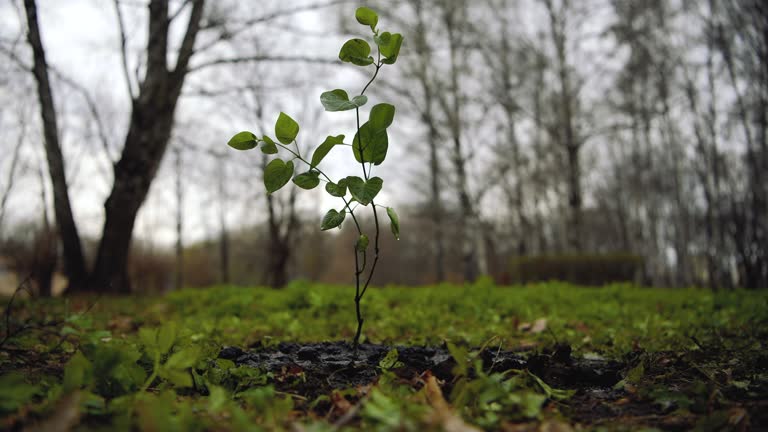
You look out your window. You drive down the road. You see a wooded area on a parcel of land bordering new development. You may think, “Well there’s trees over there, we still have some nature.” Just because you see trees doesn’t mean there is biodiversity.
What is biodiversity?
Biodiversity broken-down means “bio” life and “diversity” many.
Earth is a living being- it is literally a body that lives and breathes. Our human bodies have systems that animate us, our circulatory system, digestive system, neurological system, Earth has “bodily systems” too. The Spheres of Earth, the Biosphere, Hydrosphere, Geosphere, and Atmosphere, are the “bodily systems” that animate the Earth.
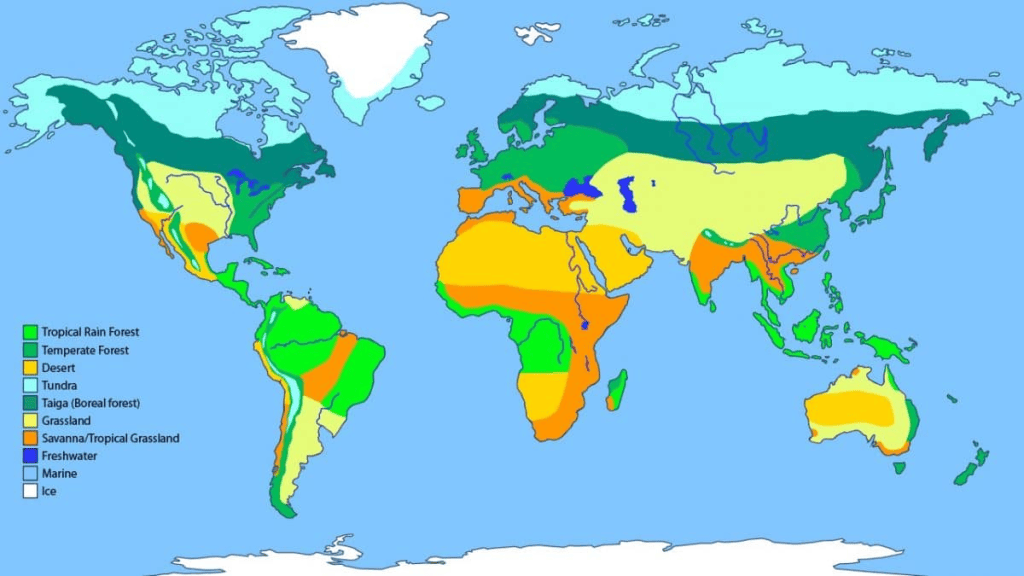
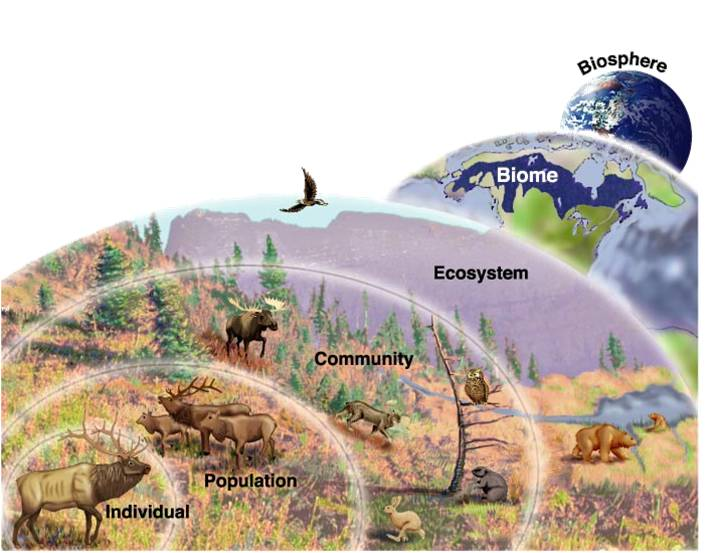
The Biosphere hosts all life on Earth as well as processes that support it including flora, fauna, soil, water, fungi, and more. Within the Biosphere, large latitudinal regions are called Biomes where climatery likeness and environmental conditions shape the ecology. If we look within Biomes, to smaller spatial areas, we experience Ecosystems where abiotic and biotic elements are networked together over a large area. If we look on an even smaller scale, Ecological Communities and Habitats host relationships that are more closely observable. Lastly, if we think even smaller, we can focus on a Population or Individuals of specific species. This is not unlike our human lives, where Earth is our home, Geographic Regions our Biomes, Nations our Ecosystems, Neighborhoods our Ecological Communities, Populations our Families, and Individuals as Ourselves.
So, back to biodiversity. Stated by the IUCN, biodiversity is “The variability among living organisms from all sources including, inter alia, terrestrial, marine and other aquatic ecosystems and the ecological complexes of which they are part; this includes diversity within species, between species and of ecosystems.”
Ecological Communities, and the variety of habitats within them, flow as a network of relationships, where the lifeways of each species in the community influences that greater network. Each species population and the individuals of that population change the environment in their day-to-day survivance, creating feedbacks and catalysts.
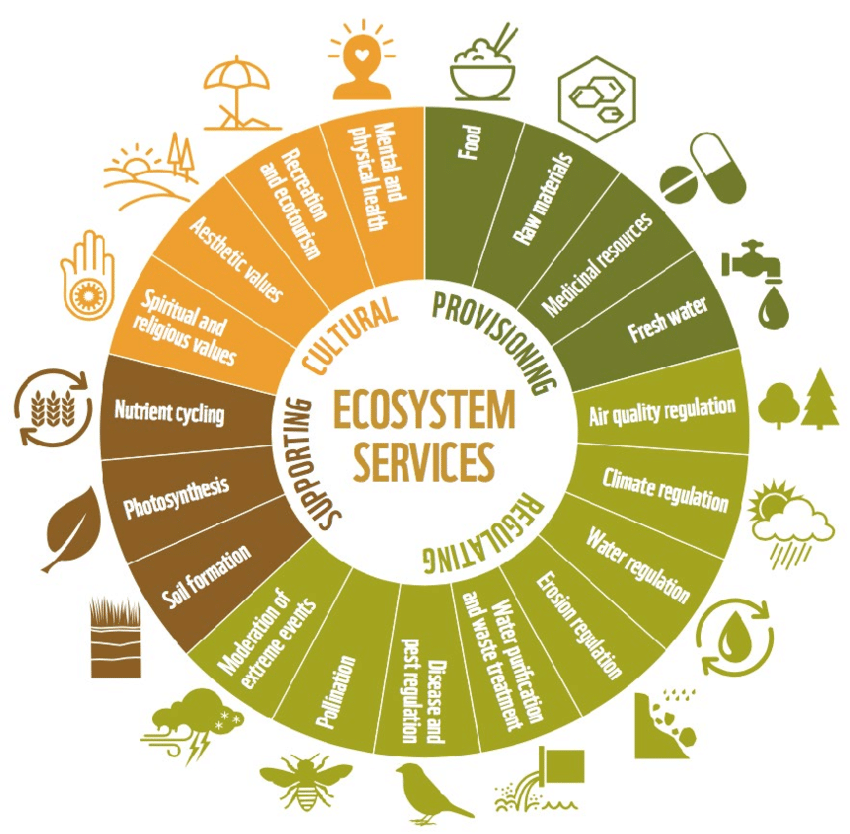
Like a tapestry, the many species of Ecological Communities and abiotic elements that support them, are woven together as pieces. The more pieces there are, the stronger the tapestry. The greater the biodiversity, the greater the health and functionality of an Ecological Community. When an Ecological Community has thriving biodiversity, it is functioning at the highest capacity possible. The product of that functionality is ecosystem services. Ecosystem services provide us with the resources we need- clean air and water, medical resources, food resources, and economic natural resources like metals, wood, minerals, cultural materials, etc.
Our human society is part of the Biosphere and, truly, a mirror of the natural world. If we take away the constructs of modernity and focus on Human Rewilding including practices of Bioregionalism, Traditional Ecological Knowledge, and Primitive Skilling, these intergenerational knowledge and life ways require direct connection to and use of local environments- making use directly part of Ecological Community as we shape environments based on our activities. In our current globalist system, we still receive and use Ecosystem Services but over many steps in which we are not connected.
So, what does this have to do with seeing stands of trees and thinking its “good enough” nature.
Over the last 200 years, industrialization and modern progress culture have brought us much advancement, but the cost has been the degradation of the Biosphere. Industrial, commercial, residential, and agricultural land uses and economic activities have required ecosystem services for generations on a macro scale. Over exploitation of the Biosphere, has driven deforestation, habitat fragmentation or disconnection, and loss of species populations. These factors have caused biodiversity loss on a global scale. This loss is directly caused by the degradation of the networks and relationships in Ecological Communities. We are removing strands from our biospheric tapestry, the more we remove, the more it falls apart into disrepair.
World Wide Fund for Nature (WWF) and the Zoological Society of London (ZSL), published the Living Planet Report in 2018. The Living Planet Index analyzed data from 16,704 populations representing 4,005 vertebrate species worldwide. The report found a 60% average decline in monitored vertebrate wildlife populations between 1970 and 2014. This means that, throughout many species, population numbers are significantly down in many different ecological communities and their habitats. This indicates an overall loss of biodiversity and reduction of ecosystem services.
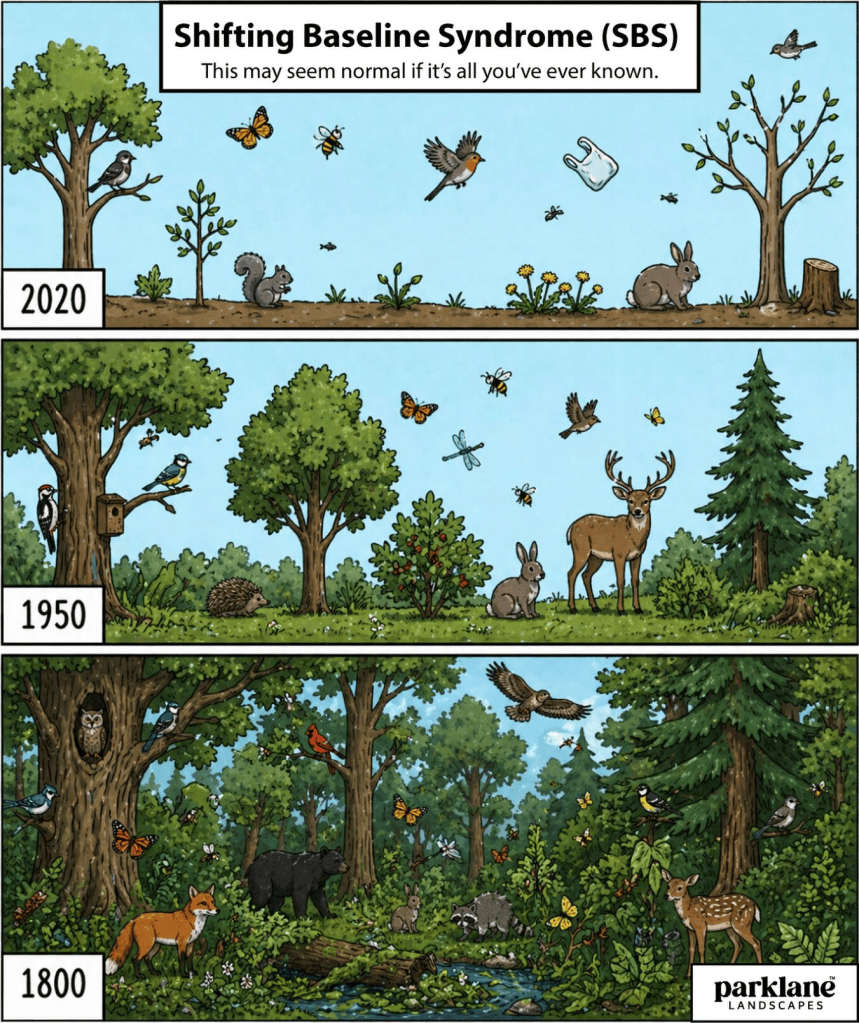
Maximizing biodiversity is about maximizing diversity itself. Ecological Communities are made up of many different habitats, not just one kind. Habitats are filled with many different species, not just a few. Over generations, we have “shifted baselines”, accepting less and less diversity in our Ecological Communities, including habitat diversity and species diversity, as normal.
When you think of restoring nature in your New Jersey community, the first thing you think is, “let me plant trees”. Woodland habitats and individual trees are essential and provide many benefits. These natural assets should be continually restored and protected, especially old growth, however, our goal should be restoring a diversity of habitats- not just woodland habitats. We want to keep as many parcels of wooded areas in our communities as possible, but the woods we see bordering our civilization are only the tip of the iceberg and, unfortunately, due to the breakdown of our biospheric tapestry, the woodlands we do see do not host as much life as we may think.
Open space habitats, such as meadows and grasslands, are all but gone. These habitats are poached very often because they are easy to build on and look like “just open land”. Rewilding, as a discipline, reminds us that the ecology we see today has a deep evolutionary history, and it is important that we understand the context of that history when we consider restoration practices.
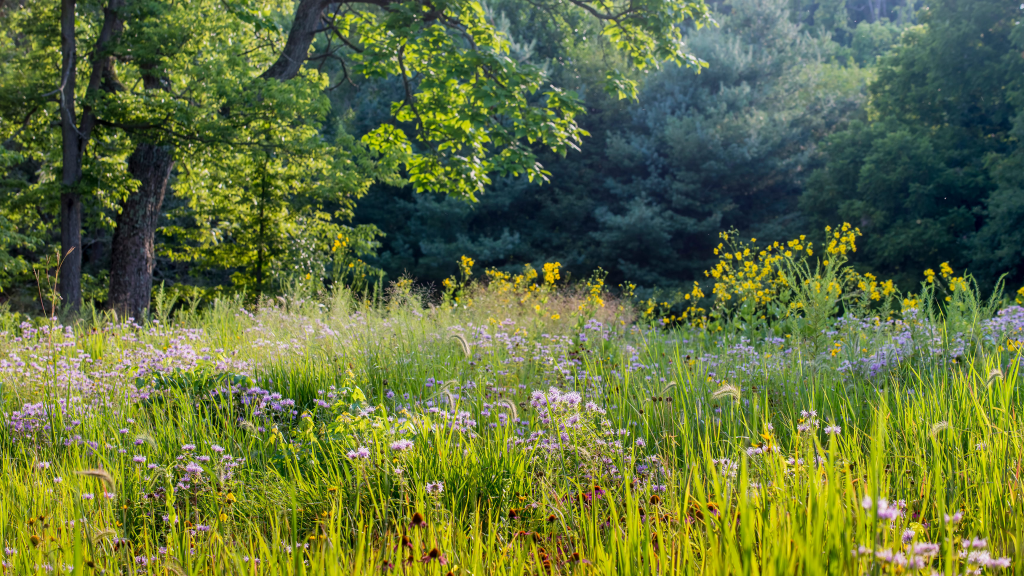
In Rewilding: The Radical New Science of Ecological Recovery, Jepson and Cain Blythe trace the deep evolutionary role of grasslands, noting that for millennia they co‑evolved with megafauna — large herbivores and predators — creating complex, biodiverse ecosystems. They explain that until about 30,000–10,000 years ago, the Earth’s landscapes were dominated by these large animals, which grazed, trampled, and shaped vegetation, in turn influencing climate, soil, and water cycles. This “megafauna–grassland” relationship was a key driver of life on Earth.
Jepson argues that the disappearance of megafauna toward the end of the Holocene — around 10,000 years ago — triggered a major ecological shift. Many terrestrial ecosystems transitioned from open grassland to more wooded habitats, while intensively managed pastures and agricultural fields replaced some of the most productive soils. This loss of natural disturbance regimes and large herbivore guilds has simplified ecosystems, reduced biodiversity, and altered nutrient and water cycles.
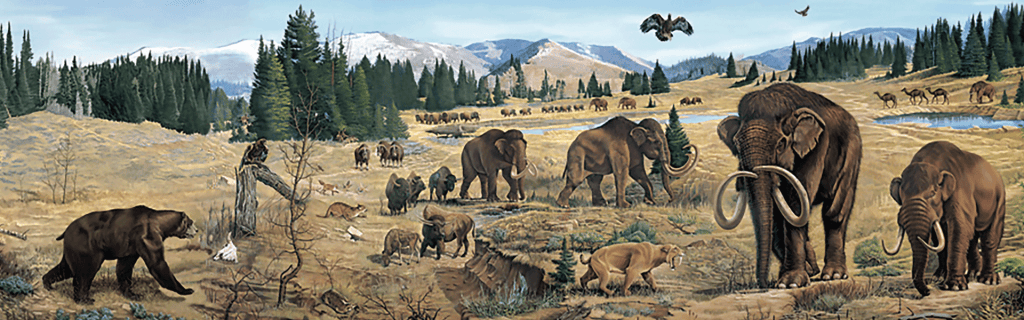
In Rewilding, Jepson frames grassland and meadow restoration as a way to reverse these changes. He emphasizes that rewilding is not just about reintroducing charismatic megafauna, but about restoring the lost interactions between plants, animals, and natural disturbances that sustain thriving ecosystems. He envisions a future where reassembled guilds of large herbivores and predators recreate the “Serengeti‑like” dynamics that once shaped landscapes, thereby influencing climate, soil health, and species diversity.
The modern environmental community recognizes that our biodiversity loss is a global issue and that particularly our open space habitats are arguably the most in need of restoration. Home Grown National Parks, Jersey Friendly Yards, and many, many other organizations have built the native plant and pollinator gardening culture over two decades-and it’s working. People in droves are changing property management styles by removing plain grass lawns in favor of ecologically restored gardens featuring native plants and habitat elements.
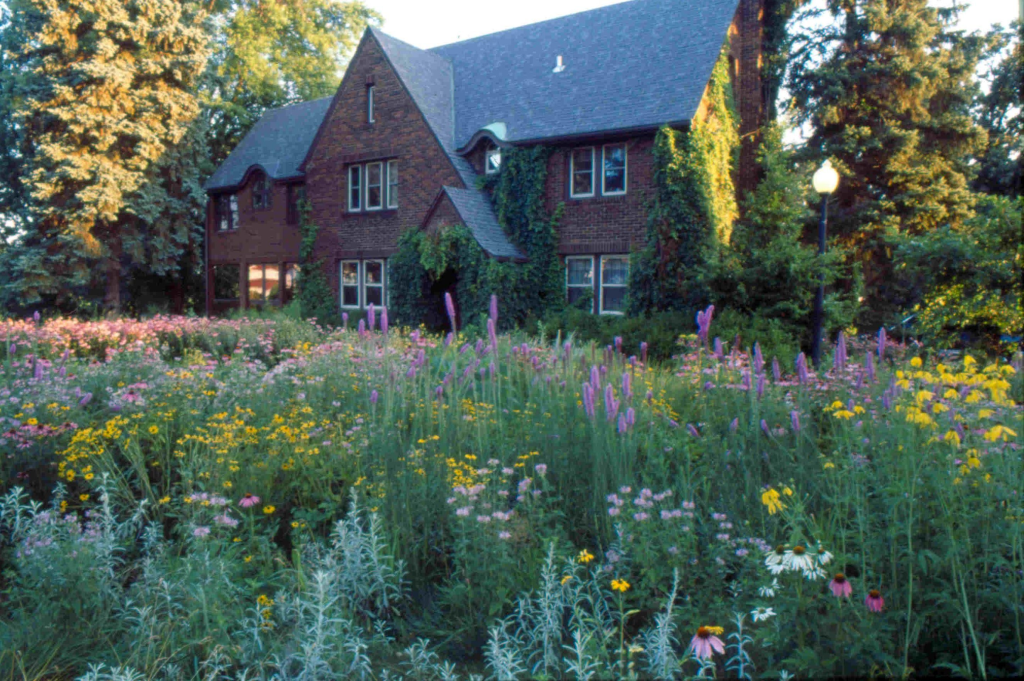
Yes, you are creating a great increase to local biodiversity. Yes, you are establishing connectivity for wildlife from habitat to habitat. Yes, you are decreasing chemical pollution, herbicides, pesticides, and fertilizers, due to changes in property management. But if we think deeper, beyond the clear benefits that we already know, understanding that we are also restoring habitat diversity in total in a historical, evolutionary context. Our restoration is literally influencing the success and evolution of life.
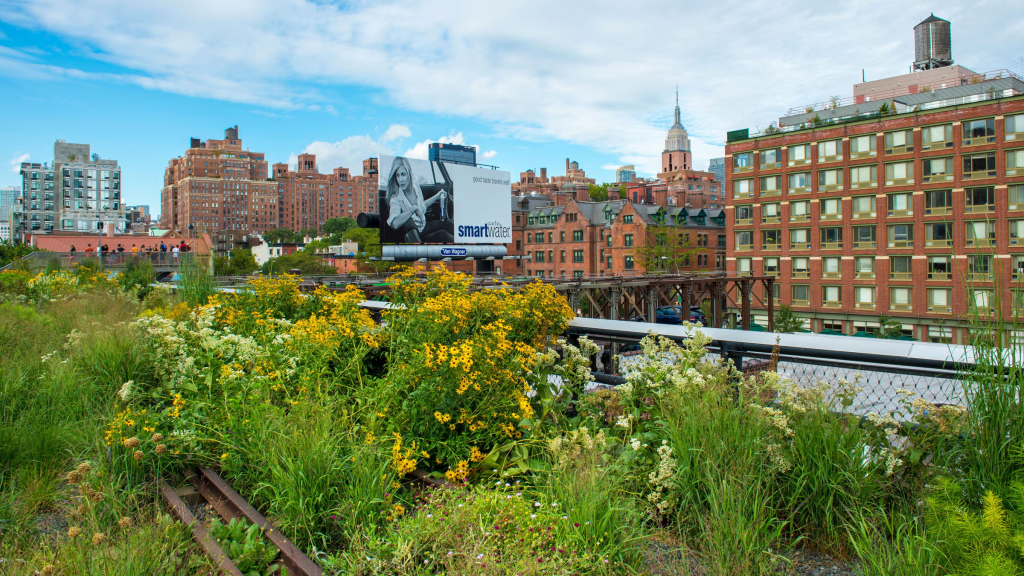
When we Rewild Land, we want to benefit the entirety of our ecological community. Beyond implementing native plants into landscape, it is important to understand the full scope of our Ecosystem, Ecological Community, Habitats, and the complex networks within them to plan for the best restorative action. Studying Bioregionalism, understanding your EcoRegion, and observing the habitats in your community is a good place to begin.
We can expand these benefits when we Rewild Communities, by transforming public land space, parks, school grounds, vacant land, buffer zones between development, and urban waterways, into rich biodiverse spaces with differing habitats that host accessible resources for both people and nature. We have the opportunity to weave back nature into what we have built, and it is really not too late, in fact we are more than on our way.
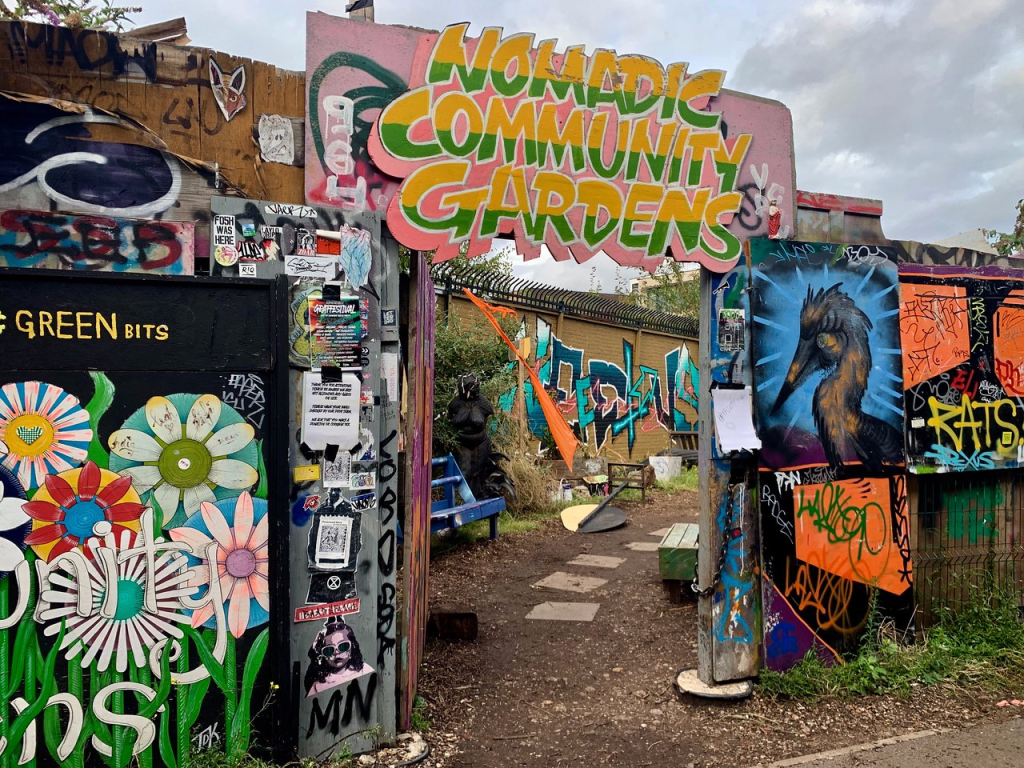
Rewilding is a recognition that we are part of something ancient. Boosting biodiversity and habitat diversity by rewilding is not just a fun hobby, it provides us directly with resources that we need for our own survivance. We are being robbed of the ecosystem services in our local environments and our deep historical connections to them. The only way to take back what has been taken is to literally build it back.
Just because you see a stand of trees doesn’t mean there is biodiversity but perhaps we aren’t too far away from bringing that life back.
To learn more about Fran, visit About the Founder.
Check out this story & more on the Founder’s Blog! Get notified for every new post. Subscribe Today!
We are Bringing the Rewild Revolution to New Jersey. Get notified of every new post. Subscribe Today!
Join the Rewild NJ Community.
Learn More & Connect
Email: rewildnjcc@gmail.com
Follow us on social media @rewildnjcc.
Support
Rewild New Jersey Community Cooperative (RNJCC) is completely volunteer based and self-funded. Contribute to support our projects and development!
Rewild New Jersey Community Cooperative (RNJCC) is currently pending nonprofit organization status. Contributions are not tax deductible.


One response to “Just Because You See Trees Doesn’t Mean There Is Biodiversity”
This was one of your best articles, Franny.
The problem with shifting base lines is something I have been thinking about for a while. We often see only the changes that have occurred over our own lifetimes. I feel that this loss of long term perspective increases our tolerance for the loss of biodiversity around us. That is why we need a more historical perspective; understanding what greater biodiversity is by visiting forests, farmland and communities where development has been blunted.
Art
LikeLike