
By: Francesca Mundrick, Founder & Executive Director
New Jersey, and greater North America, showcases amazing, expansive wild lands and natural resources but it does not come without controls.
Every piece of land is a parcel- zoned, planned, stewarded by some entity. The protection of nature comes with complex layers- special interests, ownership, policy, stewardship goals, opinions, and, ultimately, power- this is both good and bad.
Protected Areas are defined as “designated regions managed to conserve biodiversity, safeguard ecosystems, and provide cultural and economic benefits.” The International Union for the Conservation of Nature (IUCN) is the most well-known entity that tracks and categorizes the types of Protected Areas worldwide. According to the IUCN, “only 17.6% of the world’s land and inland waters are within documented protected and conserved areas, and around 8.4–8.5% of the ocean and coastal areas are similarly protected.”

Understanding Protected Areas is essential to comprehending how to navigate the true complexity and reality of many modern environmental issues. If we understand how Protected Areas “work”, we can better understand key issues and, more importantly, our rights and part of our sovereignty to connect, access, and maintain agency of local lands as independent citizens.
In the United States, types of Protected Areas are categorized based on ownership and how the resources can be utilized. What does this mean? It means that there is a range of access, recreative use, infrastructure, and stewardship methodologies applied to “manage” wild lands and resources.
Local, County, State, and Federal Government own most of the acreage considered Protected Areas in New Jersey and the greater United States. Nonprofits, Land Trusts, and Conservancies make up smaller percentage. The stewardship methodology for management applied to a Protected Area depends upon the entity that owns it.
Preservationist stewardship methodologies for management feature low management, nature-first, low impact, low interaction practices. Example: Biodiversity assessments, habitat restorations, wilding, limited access, limited recreation. Conservationist stewardship methodologies for management feature high management, human guided, high interaction practices, high recreation. Examples: Forestry, wildlife management, hunting, habitat monitoring and diversification, natural resource monitoring, fishing, biological studies. Preservationist culture focuses on the intrinsic value of nature while Conservationist culture focuses on sustainability, commodity, and utilization. Rewilding as a discipline interestingly fits into both of these schools of thought.

Federal Protected Areas
Federal Protected Areas are nicknamed “Public Lands” as these spaces are owned by the Federal Government as nationalized resources where all citizens have access but are limited in recreative use.
The Federal Government owns millions of acres of land throughout the country under several agencies including Department of Agriculture and Department of Interior. Within these agencies departments including U.S Fish & Wildlife, National Parks Service, Bureau of Land Management, and National Forest Service manage an array of Protected Areas. National Parks, National Forest, National Historical Monuments, National Wildlife Refuges are just a few types of Federal Protected Areas.
Federal Protected Areas were “invented” with the foundry of Yellowstone National Park, and the National Parks Service itself, in 1872. Over the next twenty years, several more Federal Protected Areas would be established. The first Federal Protected Areas were seen as invaluable, unique, and awe-inspiring which fostered the foundational culture that Federal Protected Areas existed to preserve the irreplaceable natural heritage of America.
At the turn of the 20th Century, with industry booming from the Industrial Revolution, President Theordore Rooverslt expanded the Antiques Act to provide greater Presidential power to the establishment of new Federal Protected Areas.
Teddy Roosevelt’s expansion of not only the National Parks Service but nearly all governmental infrastructure worked to increase the number of Federal Protected Areas. This helped to shape the idea that we are not only preserving the natural heritage of America, but we are also acting in a sustainable manner to safeguard resources for the next generations- the beginnings of mixing the ideals of both preventionist and conservationist culture.
It is important to understand that Teddy went against unchecked corporate monopoly in favor of increased shared, collective natural resources. He taught us the importance of balancing economic development with conservation- he truly was a progressive conservative. Teddy and his peers accomplished great success that still reigns true today in our conservation culture- but not without continual undermining.
Map: Protected Areas Resources | U.S. Geological Survey

Most Federal Protected Areas are managed with a combination of preservationist ideals and conservationist practices meaning environments, while still maintained with traditional forestry, wildlife management, and scientific research, are safeguarded from heavy handed use.
Most Federal Protected Areas are accessible for “low impact” recreative use where nothing is taken from the area boundaries. This includes hiking, biking, rock climbing, kayaking, and more. Hunting, fishing, foraging and similar practices have historically been barred from most Federal Protected Areas with these activities only being allowed at some National Wildlife Refuges under U.S Fish & Wildlife and some land spaces under Bureau of Land Management. Similarly, industry is barred from these land spaces including extractive mining and fossil fuels-the epicenter of many political battles.
New Jersey’s most famous Federal Protected Land is the Delaware Water Gap Recreation Area and Edwin Forsythe National Wildlife Refuge.
Regional & Local Protected Areas
Beyond Federal Protected Areas, other governmental and non-governmental entities help to develop and manage Protected Areas.
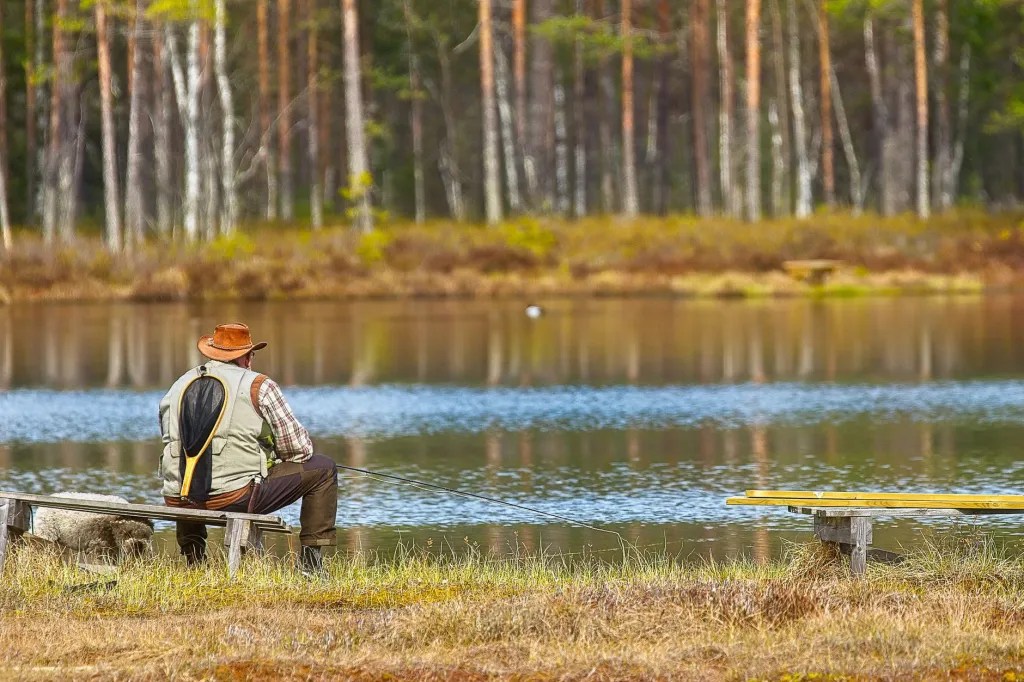
Citizen Ownership: Citizen ownership of property means individuals make decisions on stewardship methodologies for management. Citizens can take part in activities on land including homesteading, hunting, fishing, and foraging, work with ecological restoration specialists and arborists, and apply for conservation easements to manage and protect wild lands and resources for generations.
Access in New Jersey: Dependent upon property owners.
State Lands: State Parks and other types of protected areas are owned and stewarded by the State Government similar to Federal Government.
New Jersey Access Status: State Parks and Wildlife Management Areas are State Lands accessible for all recreative and access including hunting and fishing- foraging is still being contested. Motor sports and vehicle use access is limited.
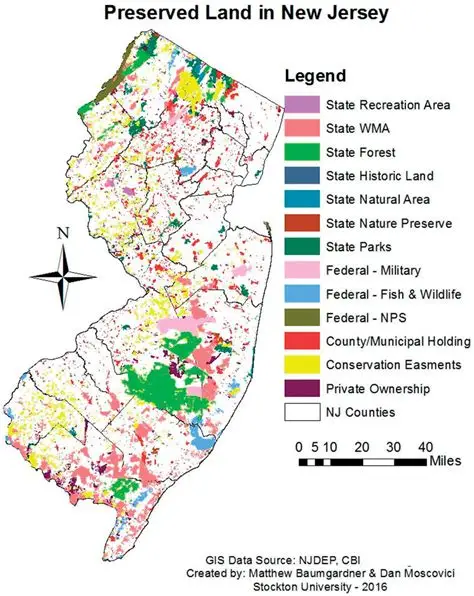
County Lands: County Parks and other types of protected areas are owned and stewarded by the County Government similar to State Government.
New Jersey Access Status: County Parks are County Lands accessible for all recreative use and access sometimes including hunting and fishing- foraging is still being contested. Motor sports and vehicle use access is limited.
Local Lands: Municipal Parks and other types of protected areas are owned and stewarded by the Local Government similar to County Government.
New Jersey Access Status: Local Parks are Local Lands accessible for all recreative use and access with very limited hunting and fishing- foraging is still being contested.
Municipal Owned Resources: Large cities with high tax revenue own wild lands and resources in other areas to safeguard resources for their urban populations. This usually includes land area and watershed around man-made water reservoirs. Sometimes, the city who owns these types of Protected Areas partner with non-profits, land trusts, and conservancies to allow limited recreative use and access.
New Jersey Access Status: Most water reservoirs in New Jersey are in the Highlands or Northwestern NJ. These reservoirs and the surrounding wild land are owned by the City of Newark for urban water supply. Most active reservoirs and their wild land space in New Jersey are accessible for recreative use and access including hiking, biking, fishing, and kayaking, due to partnerships between the City of Newark and regional Land Conservancies.
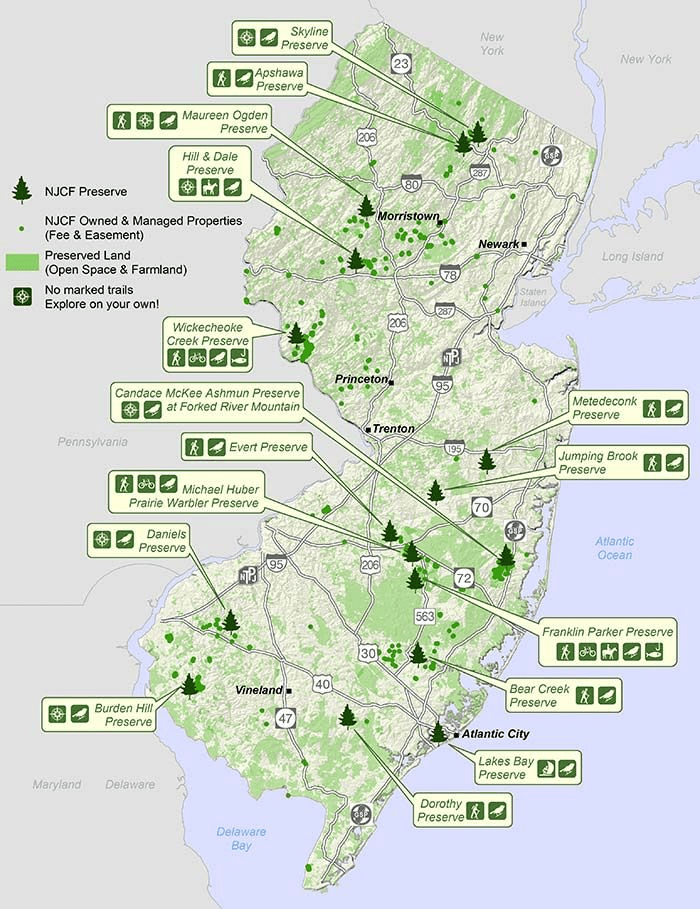
Non-Profits, Land Trust & Conservancies: Organizations that take donations, grants, governmental resources to maintain legal ownership, stewardship, or partial control of a property at the request of the landowners. Non-Profits, Land Trusts, & Conservancies can be large or small organizations- all of which support the preservation of hundreds of acreages of land across New Jersey. Non-Profits, Land Trust, & Conservancies are sometimes accessible to the public depending on funding. These sites may include nature centers, education programs, trails, and water access. While recreative use and access can be low or variable these Protected Areas, these organizations have a big impact, especially locally, to increase the net gain of nature.
New Jersey Access Status: There are many Non-Profits, Land Trusts, and Conservancies in New Jersey. These include New Jersey Conservation Foundation, Ridge & Valley Conservancy, Saddlers Woods, NJ School of Conservation, Native American Conservation Corps, The Land Conservancy of New Jersey, Wetlands Institute, and South Jersey Land & Water. All of these entities offer some accessibility for recreative use and access except hunting and fishing- foraging is still being contested.
Highlighting Considerations
We are in a race to protect the wild world- without taking these steps now we will lose our wild lands and natural resources. Even with varying types of entities and competing interests and stewardship methodologies, protecting nature by increasing Protected Areas is essential, no matter how we get there. The time is now to unite- any environmental win is a win.
For a State like New Jersey, a densely populated land with constant development pressures and a diversity of geographic provinces, geology, and ecology, there is no time to waste regarding creating more Protected Areas. The diverse environmental community in our State works tirelessly to safeguard as many parcels for conservation as possible.

Who owns and stewards Protected Areas does matter- a lot.
What we have to ask ourselves is, do we want the Government, at any level, in control of wild land and natural resources?
On the one hand, this offers mass sweeping protections and puts our shared tax dollars into maintaining nature in a collective fashion. Overall, this is a good platform for all citizens to have access to shared natural resources and heritage.
On the other hand, the government makes the rules on what is and is not ok to do on the land – meaning, at the end of the day, even with checks and balances, they can do what they deem fit. Government can turn around and sell off our Protected Areas, allow extraction of resources, or remove our access all together in the name of economic growth, energy independence, and power at the global scale. While the net gain is high, we are still talking about governmental control and management of resources.
Who does the land really belong to? The Government or the People?
Are Citizen Owners, Non-Profit, Land Trusts, and Concervancies better entities for Protected Areas? Does this create more access and agency or less?
This is an important question. Perhaps with wider perspectives these entities can be very beneficial to visioning new ways to protect nature while maintaining human connections to land.
Conclusion
We need to move towards combining stewardship methodologies for management and merge special interest groups by homogenizing access and tackling obstacles that keep everyday citizens from true agency of local Protected Areas. We need more citizens to own land. We need more representation for the people on decision making for local land stewardship. We need indigenous communities and local communities to reclaim lands. There is a way to vision even better results for safeguarding nature.
Rewilding is the discipline that can join us together- this is the common ground built to help us evolve our ideas. Rewilding is truly forward thinking and inclusive- it accounts for existent systems and conditions and provides pathways that make sense for people and nature by focusing change on the local level. With restoration of nature and empowerment of people at the center, Rewilding, especially within communities, changes how we look at power and that ultimately reframes our motivations and intent when we seek to protect nature.
To learn more about Fran, visit About the Founder.
Check out this story & more on the Founder’s Blog! Get notified for every new post. Subscribe Today!
We are Bringing the Rewild Revolution to New Jersey. Get notified of every new post. Subscribe Today!
Join the Rewild NJ Community.
Learn More & Connect
Email: rewildnjcc@gmail.com
Follow us on social media @rewildnjcc.
Support
Rewild New Jersey Community Cooperative (RNJCC) is completely volunteer based and self-funded. Contribute to support our projects and development!
Rewild New Jersey Community Cooperative (RNJCC) is currently pending nonprofit organization status. Contributions are not tax deductible.


One response to “Protected Areas: Reality of How Our Resources are Managed”
Nice maps!
>
LikeLike