By: Derek Polzer, Advisory Board Member
I build “Folk” instruments, 5-string banjos & variations on the dulcimer.
There are times when I’m building these instruments it feels sacramental probably due to their cultural origins. These instruments are what I call “earth informed”, because the materials used are wood, gourds, metal, & animal hide, & that the cultures that first developed these instruments were primarily agrarian or hunter gatherers. The late Scott Didlake called the early gourd banjos “a well of souls” because he believed they carry stories & a cultures history. The earliest antecedents of the banjo were used by griots & story tellers as accompaniment as they shared the tales & origin stories when their communities would gather.
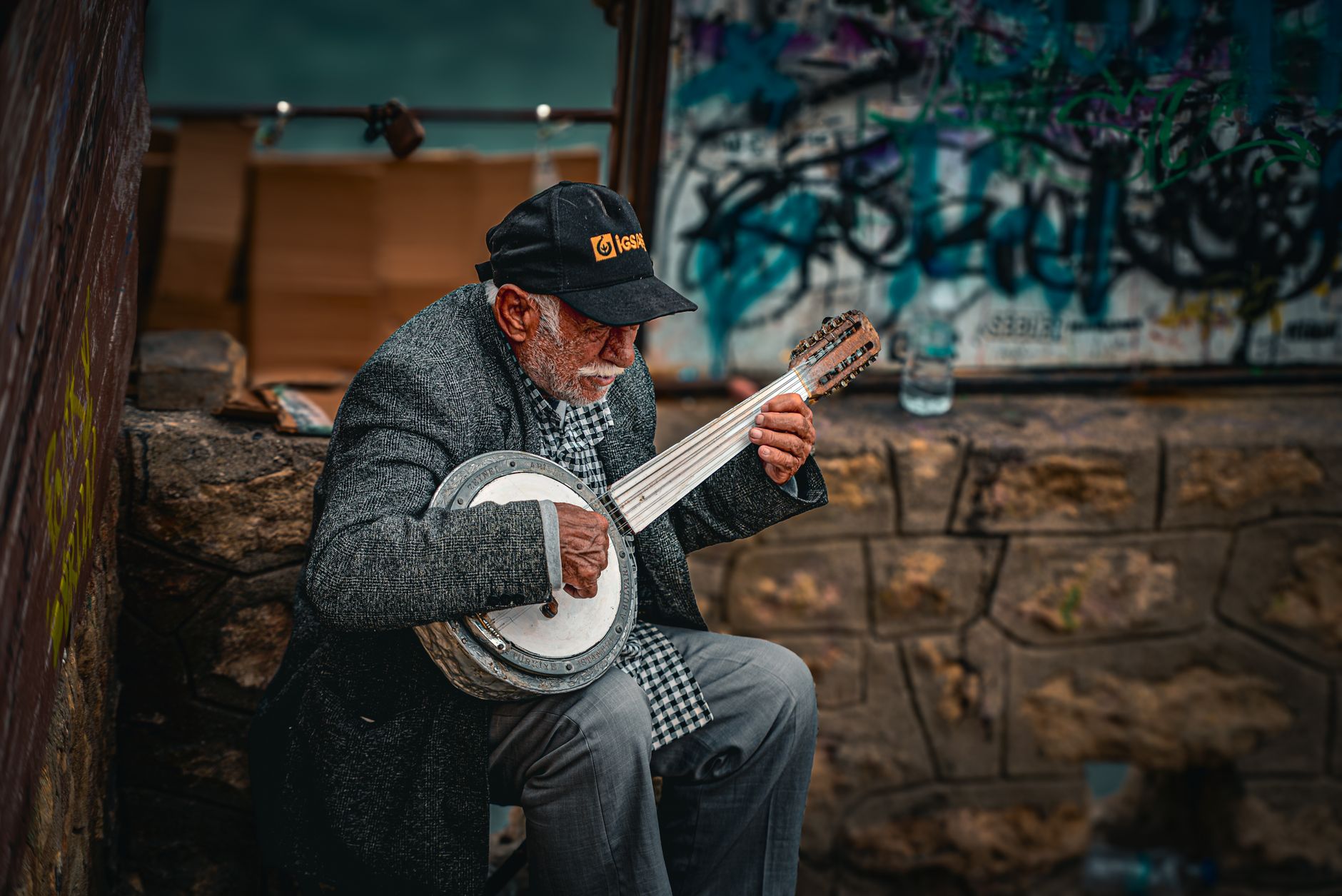
I’ve been playing these instruments & a couple of others for many years, learning to play them by listening & watching other players, then mimicking what I heard. I’ve heard this way of learning technique referred a the “folk process”. It was the old way of passing down local cultural traditions to another generation before our present digital way of YouTube or places like the School of Rock.
This was the way so much knowledge was once handed down & shared. Skills such as cooking, canning, husbandry, gardening, artisanal skills like woodworking, weaving, spinning, knitting, sewing; using locally accessed materials. I call these skills of “necessity & place”. You had a need; you addressed it with the materials at hand.
I’m not being nostalgic! I remember how skilled my grandparents were, they had a farm in northeast Ohio & I loved hearing their stories about how well they lived during the Depression. Growing up in post-WWII suburban NJ, I remember how there was always someone in the neighborhood who could be asked for advice should something need fixing. They would help with simple car repairs, fixing a TV or radios, or broken appliances, there was always somebody in the neighborhood who would gladly come-by & help for nothing more than a cup of coffee & conversation. They were simply being “neighborly”, they were members of the community!
So, what does this have to do with building musical instruments, or rewilding for that matter?
Our goal of rewilding NJ is going to take time, it will probably take generations, but we can begin by learning what it means to be “neighborly”, & by getting to know where we live & all of those who live there. We can begin to learn some of the “old ways” & sharing them with our neighbors. In my recent essay on self-sufficiency, I mentioned that my friends & I taught each other VW repair, or how to play musical instruments, along with many other wonderful skills; we were passing on what we had learned from other friends, family & elders. We learned how to turn wrenches, hammer nails, & fix things just about anything. I can hear something saying, “oh, they were simpler times”, yes, they were & that’s the point! We have complicated our lives to where we have become helplessly dependent on “professionals” to do the simplest things.
Maybe that’s a place to start by reconsidering & relearning the “old ways” to assist in our goal to live a bit more simply, & to live a bit more intentionally?
We must start somewhere & I believe it must start locally by being more “neighborly”, creating & participating in our communities, & slowly shifting the present social, economic, cultural paradigm to one is genuinely sustainable!
Here’s a place to begin!
…paddling ever onward! Ol’ Bear Derek Polzer
Check out this story & more on the Community Blog! Get notified for every new post. Subscribe Today!
We are Bringing the Rewild Revolution to New Jersey. Get notified of every new post. Subscribe Today!
Join the Rewild NJ Community.
Learn More & Connect
Email: rewildnjcc@gmail.com
Follow us on social media @rewildnjcc.
Support
Rewild New Jersey Community Cooperative (RNJCC) is completely volunteer based and self-funded. Contribute to support our projects and development!
Rewild New Jersey Community Cooperative (RNJCC) is currently pending nonprofit organization status. Contributions are not tax deductible.

