By: Jonathan Kocsis, Lead Intern
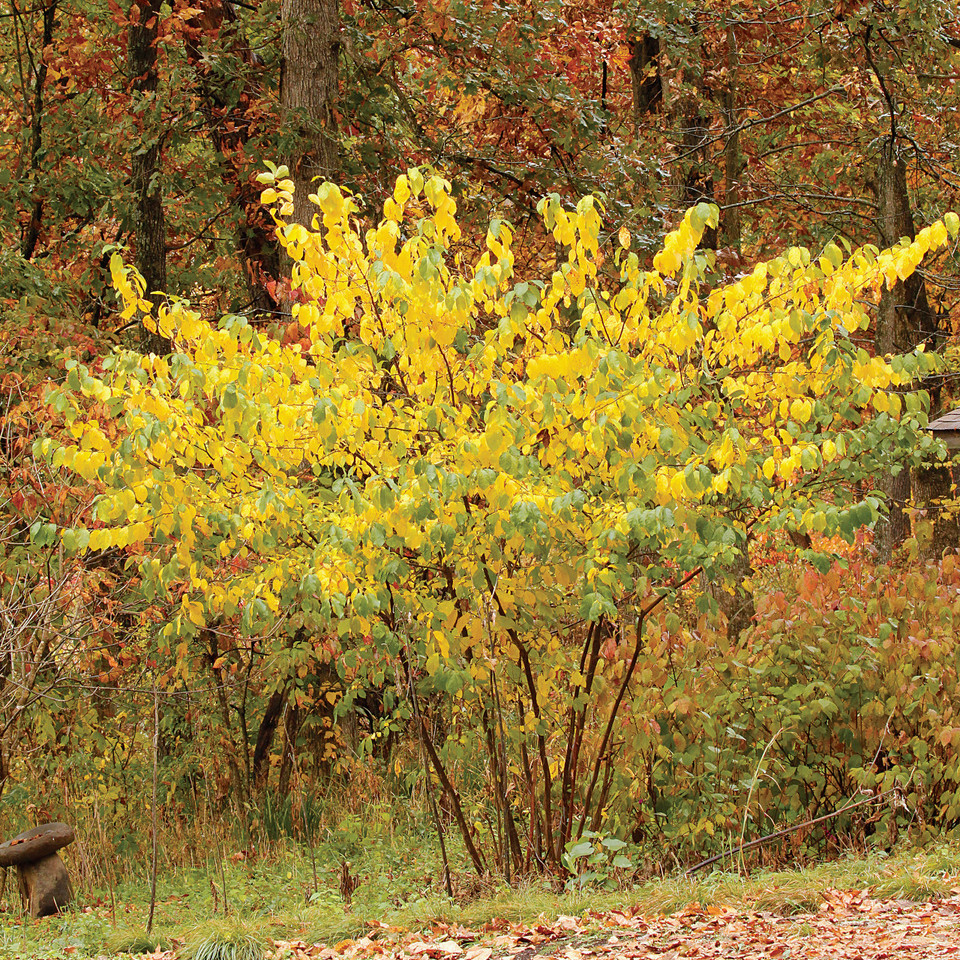
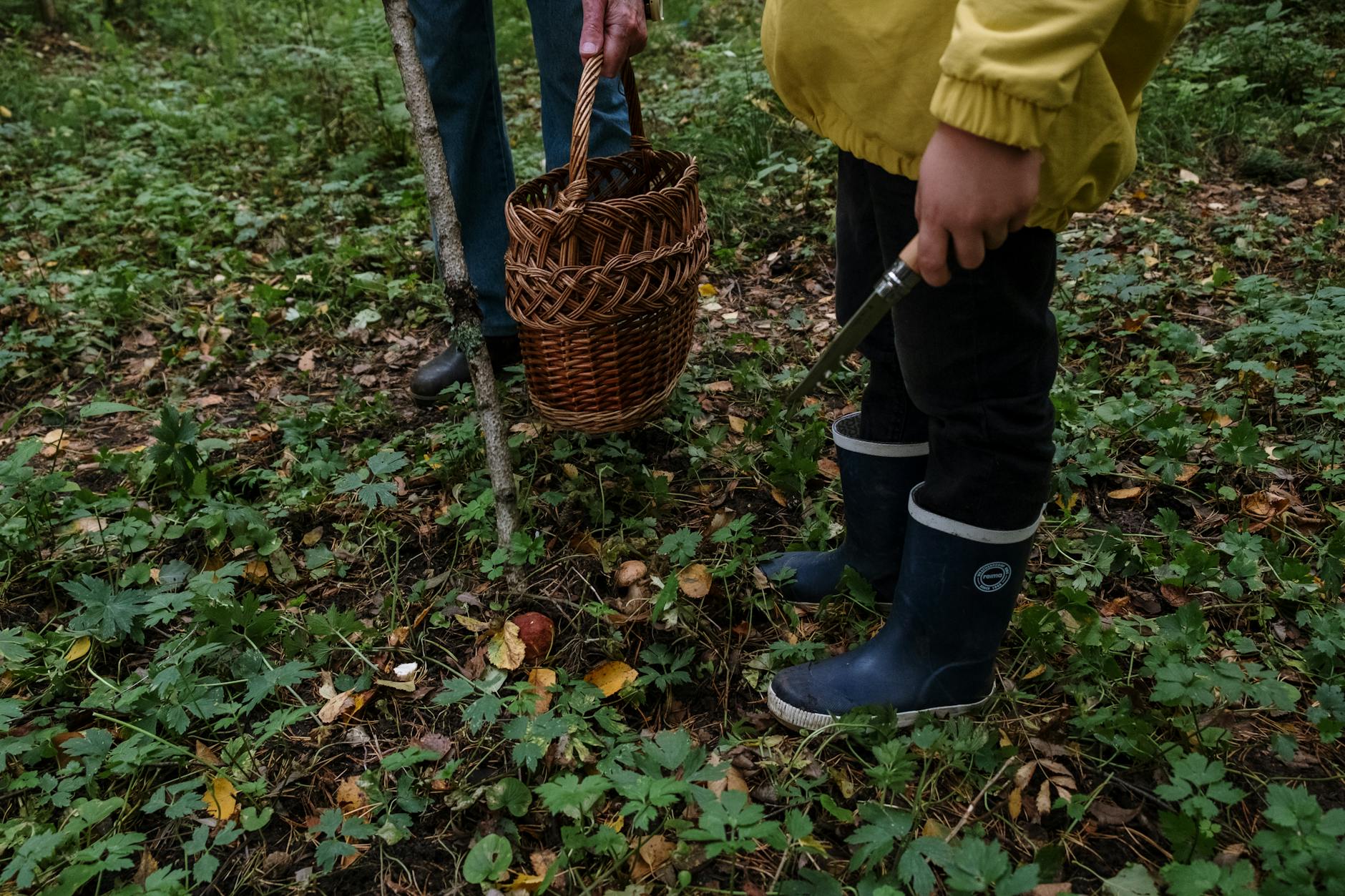
Our project began with selecting a good, forgeable, in-season plant. Spicebush was initially on the table, but we hadn’t fully decided on it until several days after we first started considering our final decision. It was decided that I would forage for (and dry) the leaves, while my partner would then make the tea out of the air-dried leaves. I began the actual searching and foraging process by checking various observation areas marked on the iNaturalist app. I eventually found a location in Alcyon Park on one of their nature trails that had a spicebush plant present. Unfortunately, by this point, the iconic red berries had already long gone. As well as most of the leaves being in the process of turning from green to yellow. Or had already turned fully yellow. Thankfully, however, it is not completely hopeless. Yellow spicebush leaves are still usable in making our tasty spicebush tea. They just do not carry as strong a citrus-like content (essential oils) that would be needed to make a better/stronger tea.
When I got back home with my load of leaves, I realized I had likely gathered much more than we would really need. With this in mind, and little time to get them prepared for drying, I decided to only take a fraction to use for the full drying process. The next steps involved separating all the leaves and the twigs from each other. The reason I had many sticks and twigs; I considered using them to add an extra element to the tea. Although they weren’t needed in the final preparation.
Once all of the leaves and twigs were finally separated, I then proceeded with just the leaves. I was tasked with picking out the ones that weren’t good enough quality to include in the leaf drying process. These included any leaves that had overwhelmingly browned over, were moldy, or were just too beaten up. It is safer to use healthier and not too damaged or dirty. If you pay attention to the aesthetic of the leaves you use, then this is a good consideration as well. After this, to get rid of any possible lingering dirt/bugs, I put the good leaves in a colander and swished them around constantly. This was done gently and in warm but not intensely warm water. Anything to avoid possible damage to the leaves helps. Another very important thing to remember when cleaning spicebush leaves is to make sure you get every leaf to the best of your ability. This also goes for drying them. (The drying process is much more important)
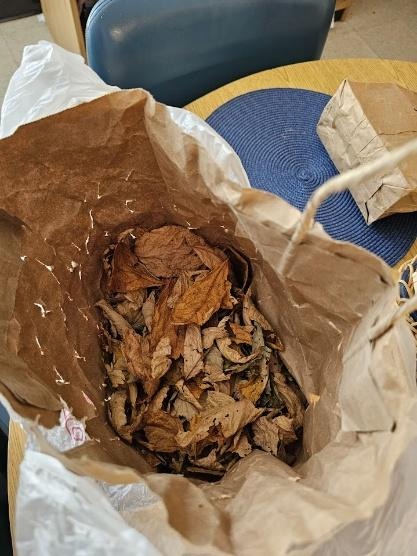
With air-drying spicebush leaves, you must make sure that you are giving them enough room and space to dry individually. If they are too clumped up, they either will not dry properly or take too long to dry, or they could develop mold or go bad. You must also make sure you are constantly checking them after several hours at least, up to a day or two, at a time. Now this is the case if you are air-drying them without the help of a dehydrator or an oven, and you are just drying them in the regular air. Which is what I chose to do. When doing this, make sure you have enough room or several bags to store them in, at least (trays or flat surfaces are better if you have them). I used several open paper brown bags and cut open many small/medium-sized holes so they can further get proper airflow. And keep the tops of the bags open. Don’t forget to keep your dry spicebush leaves away from areas of sunlight, too. Air temperatures should average somewhere around 70-75 degrees Fahrenheit. For me, it took in total about a couple of weeks at least to get that nice crunchy texture and rustic brown color. At which point, they were finally ready to be turned into tea.

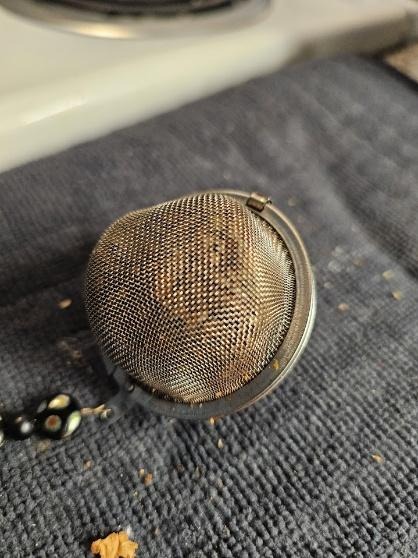
The process of crafting our spicebush tea began with careful preparation of the dried leaves. To ensure an efficient and debris-free brew, we elected to use a tea leaf infuser within a pot of freshly boiled water. This practical approach promised to yield the same full-bodied extraction that traditional recipes suggested, while cleverly eliminating the messy and tedious step of straining the leaves afterward. Our initial step involved gently crushing the dried leaves in the palm of a hand, which allowed the precious oils, which are the essence of the spicebush’s flavor, to infuse into the water readily. For the first batch, a conservative measure of 15 to 20 large leaves was selected to gauge the baseline strength and overall flavor profile. Once crushed, the leaves were sealed within the infuser and submerged in the actively boiling water, where they were allowed to steep for 15 minutes. The resulting liquid bore a visual resemblance to a weakly brewed black tea, with a delicate, warm-brown tint. A simple smell confirmed the tea’s enchanting character: the rising steam carried a distinct, comforting, chai-like quality, strongly evoking the familiar and festive scents of allspice, nutmeg, and cinnamon blended harmoniously.
Eager to explore the full spectrum of the tea’s nature, we conducted an immediate comparison, sampling the brew both hot and cold. Surprisingly, the chilling process seemed to clarify the nuances, allowing the more subtle flavors to come through. Yet our preference overwhelmingly leaned toward the warm infusion for its inherent ability to provide immediate, soothing comfort. While technically successful, this first attempt felt decidedly weak, suggesting the need for more leaves in the same amount of water.

Undeterred, we immediately proceeded to a second batch, this time doubling the quantity of leaves, approximately 30 to 40, infused into the same single mug’s worth of water. Employing the identical method, the change was instantly noticeable, with the second brew developing a significantly darker, richer color and immediately emitting an exponentially stronger, more pervasive scent than its predecessor. The increased concentration amplified the flavor dramatically, finally allowing the full depth of the tea’s elements to surface. It delivered a gentle, pronounced warming spiciness truly akin to traditional baking spices. The familiar mild chai or allspice note was still present, but this robust strength introduced previously hidden, underlying flavors. Most notably, a distinct, fresh, bright zestiness emerged, strikingly reminiscent of the tang and aroma of lemon or lime. Even at this doubled strength, we observed that the spicebush tea maintained its fundamental character, or in other words, it remained a relatively light-bodied beverage, pleasant and wonderfully aromatic, but still avoiding the intensely bold or heavy profile associated with some commercial teas.
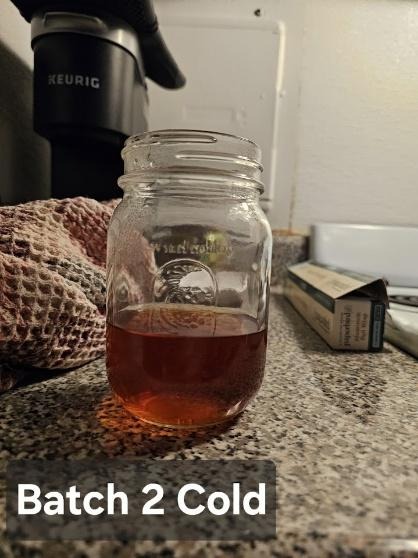
Ultimately, this process of guided experimentation proved invaluable, establishing the optimal balance for future brewing: the doubled concentration achieved the desired aromatic depth and flavor clarity without sacrificing the tea’s inherently light and refreshing character. The final product was more than just a drink. It was a deeply satisfying, full-flavored infusion that successfully captured the spicy, citrusy essence of the wild spicebush, offering a unique and comforting taste of the natural world that easily justifies its place as a distinctive and cherished homemade tea.
Check out this story & more on the Community Blog! Get notified for every new post. Subscribe Today!

We are Preserving the Wild Spirit of New Jersey. Get notified of every new post. Subscribe Today!
Help to Rewild NJ. Join the Rewild NJ Movement today.
Learn More & Connect
Email: rewildnjcc@gmail.com
Follow us on social media @rewildnjcc.
Donate
Rewild New Jersey Community Cooperative (RNJCC) is completely volunteer based and self-funded. Please contribute funds to support our launch, development, and overhead costs!
 Rewild New Jersey Community Cooperative (RNJCC)