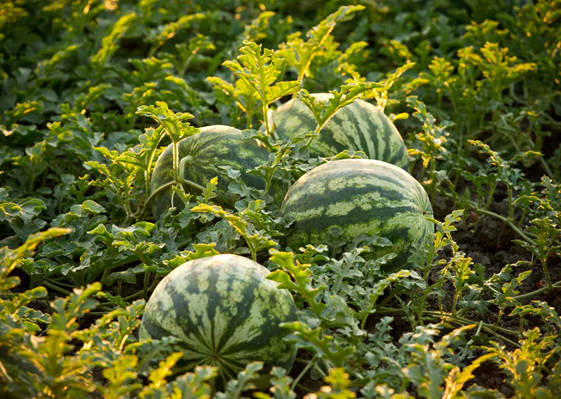
By: Jonathan Kocsis, Lead Intern
It was early one morning with frost lining the ground and the air cold and nippy as I walked through the outdoor section at my local hardware store.
Surrounded by plants in brackets hanging above my head, by the new trees ready to be planted, my 9-year-
old self felt as if I was in a jungle. It was then that I found them, a set of seeds on the floor near my foot. Picking them up, I read the label, watermelon. I decided right there that I needed to have these in my garden, and so I got them and brought them home.
Soon, I was planting them in my backyard as I dug through the frost-covered soil. I carefully planted each seed, covering them again quickly as if they would jump out of the holes I had dug, and then I waited. Months passed with no progress as I watered
them every day, making sure to allow them time to grow and flourish. This day would never come, however, and that summer, I was left empty-handed and disappointed with my lack of success with my first-ever garden. It wasn’t until very recently that I learned
what 9-year-old me had done wrong that faithful spring and why my watermelons never came up from the soil to greet me.
As I have been delving deeper into my rewilding journey, the idea of growing my own crops at home has always been a goal of mine, but I have always felt overwhelmed with the idea. However, recently I have been looking more into it and discovered an article about growing watermelons at home during the summer season, and it brought me back to that spring that I had failed.
Determined to do better now, I read through it and learned that I had done a lot of the things right. The main thing I got wrong was when I planted them. See, watermelon seeds are susceptible to colder conditions, so it’s best to plant them during early summer. I, however, planted them during the worst part of the spring when the soil was still frozen and the air was still cold, which caused my seeds to die right away.
Beyond this crucial step, I was able to do many of the other maintenance things correctly, such as keeping the soil moist throughout the growing process and planting around 4 seeds per one-inch hole. Not only did finding this make the idea of growing watermelons less daunting, but it also showed me that my first attempt wasn’t as bad as I thought it was; I just needed a bit of help and knowledge to allow me to succeed. If you are interested in growing your own watermelons, as I am, I have attached the article below as my way of passing on what I have learned.
https://yardandgarden.extension.iastate.edu/how-to/growing-watermelon-home-garden
Check out this story & more on the Community Blog! Get notified for every new post. Subscribe Today!
We are Bringing Rewilding to New Jersey. Get notified of every new post. Subscribe Today!
Help to Rewild NJ. Join the Rewild NJ Movement today.
Learn More & Connect
Email: rewildnjcc@gmail.com
Follow us on social media @rewildnjcc.
Donate
Rewild New Jersey Community Cooperative (RNJCC) is completely volunteer based and self-funded. Please contribute funds to support our launch, development, and overhead costs!
 Rewild New Jersey Community Cooperative (RNJCC)