By: Richard Federman, Rewild NJ Movement Member
On the morning of April 18, 1921 a woman named Betty Hardy Stubbs, one of the nation’s leading women’s suffrage activists, ran from New York’s Grand Central Station to a bridge spanning the East River, and jumped. Her husband, a kindly and idealistic former Professor of Forestry named Benton MacKaye, who was aware of Betty’s deteriorating mental health, pursued her to the bridge but was unable to prevent her death. Deeply distraught over his loss, MacKaye, a native of Massachusetts, accepted the invitation of a friend to utilize the Hudson Guild Farm in Netcong, New Jersey as a sort of emotional retreat that spring and summer.
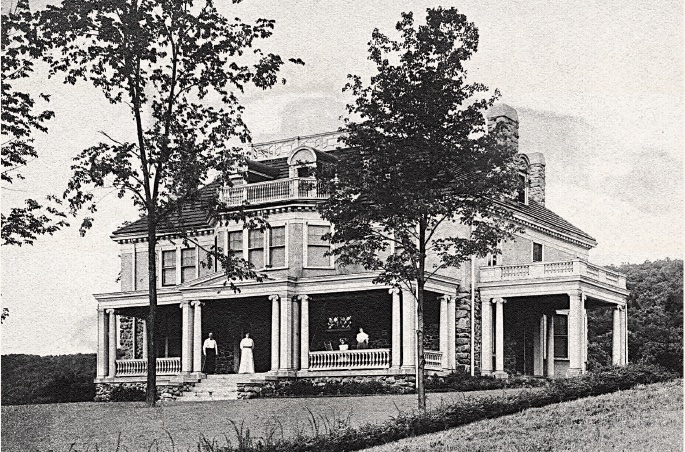
While at the Guild Farm, MacKaye spoke regularly with friend Charles Whitaker, publisher of a leading architectural journal, and Clarence Stein, a far-sighted community planner who, along with Whitaker, embraced and encouraged MacKaye’s big picture, back-to-nature philosophies. Inspired by their friendship and by the beauty of this northwestern New Jersey setting, that July MacKaye proposed to the two men his idea for a long distance hiking trail that would connect the highest peaks of the Appalachian mountain chain. Whitaker agreed to publish the proposal in his journal, and soon newspapers were picking up on the idea of “a great trail from Maine to Georgia.”
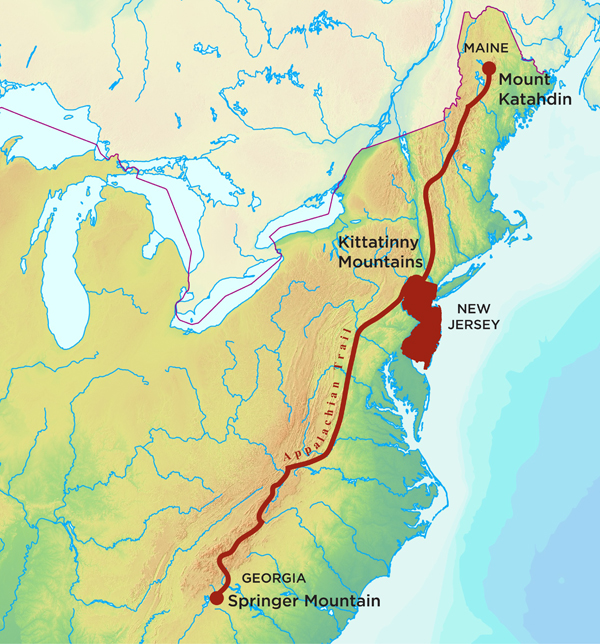
So the Appalachian Trail, the world’s most celebrated hiking path, was in some important ways conceived in New Jersey. That was far from the only connection, however, between MacKaye, the “AT” as it came to be known, and the concept of rewilding.
The Appalachian Trail as imagined by Benton MacKaye was much more than the 2,200-mile footpath that now extends from Springer Mountain to Maine’s Mt. Katahdin. MacKaye envisioned rural, mountain communities springing up along its length, with the footpath used for travel between them. These communities would allow people to escape the crowded and increasingly polluted conditions of the cities, encouraging their members to reconnect with the land, with an older and deeper mode of living, and with each other. Combining indigenous principles with (at the time) newly-scientific views on resource management, MacKaye hoped to offer Americans an appealing alternative to what was becoming an increasingly industrialized landscape.
MacKaye’s vision never became a reality, at least along the AT. The Trail – 72 miles of which pass through New Jersey, not far from the farm in Netcong – became a de facto national park, and has been managed admirably for nearly a century through a collaboration of government and local volunteers (itself a beautiful representation of what we can do when we work together). The idea of escaping to a more genuine, authentic way of life, however, has never left us. Today, it is a major inspiration behind the rewild movement.
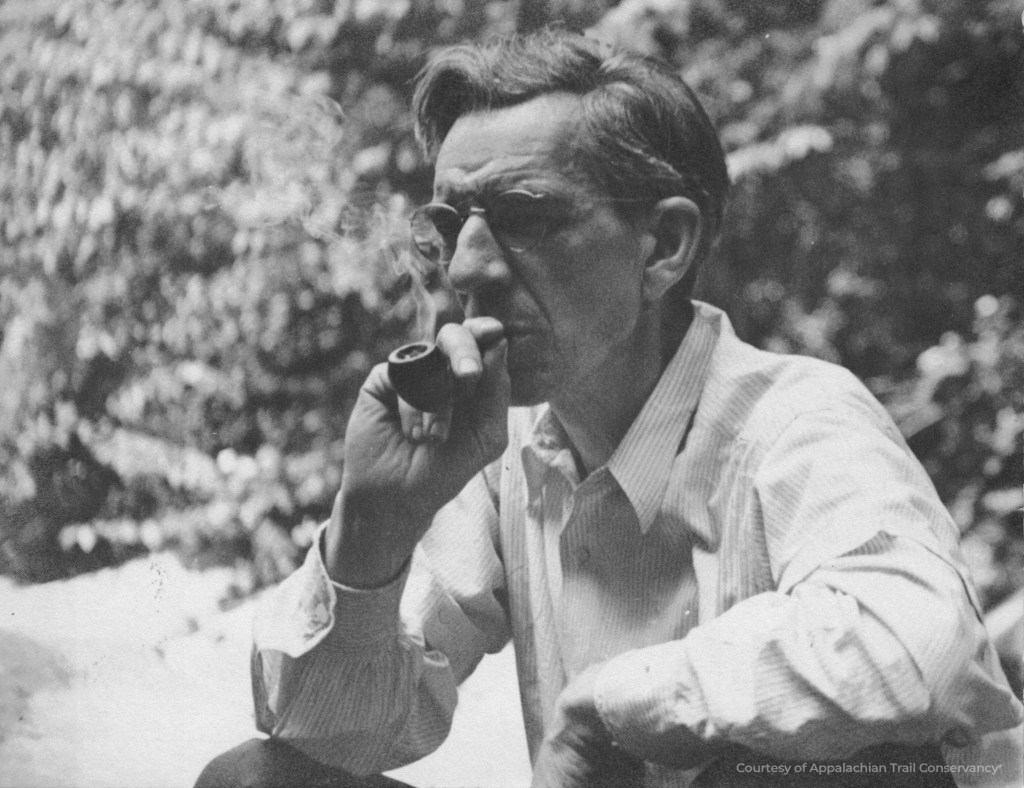
The principles of sustainability ran deep through MacKaye’s conception of cooperative, collaborative woodland communities. These would be circular economies, self-reliant, reinforcing. They would reflect an acknowledgement of the ecological footprint notion decades before it was written about in academic journals. Now, in 2025, we recognize more than ever the wisdom in such a reciprocity with nature, and the planet. On the same grounds that the marvelous notion of a long distance American hiking trail was conceived, the citizens of our state are working toward a 21st century vision that, although updated, still bears an uncanny resemblance to the ideas discussed at the Hudson Guild Farm in the summer of 1921.
So how did things turn out for our friend Benton MacKaye? Ironically, or perhaps inevitably, he became disillusioned with the trail project that his imagination had birthed. As the emphasis shifted more and more to walking miles and less on the value of connecting with the land, or the wilderness experience, he distanced himself from the AT. Far from giving up the fight however, MacKaye was a key figure in the establishment of the groundbreaking and influential Wilderness Society. He lived to be nearly 100 years old and remained, to his last days, an advocate for nature, for freedom, and for valuing the connection between people and the land.
Check out this story & more on the Community Blog! Get notified for every new post. Subscribe Today!
We are Bringing Rewilding to New Jersey. Get notified of every new post. Subscribe Today!
Help to Rewild NJ. Join the Rewild NJ Movement today.
Learn More & Connect
Email: rewildnjcc@gmail.com
Follow us on social media @rewildnjcc.
Donate
Rewild New Jersey Community Cooperative (RNJCC) is completely volunteer based and self-funded. Please contribute funds to support our launch, development, and overhead costs!
 Rewild New Jersey Community Cooperative (RNJCC)