By: Francesca Mundrick, Founder & Executive Director
Balancing economic development, human prosperity, and the conservation of nature has been a looming challenge for American society, New Jersey communities, and beyond.
Modern conservation broadly functions through the frameworks provided by Sustainable Development.
According to National Geographic, “Sustainable Development is an approach to growth and human development that aims to meet the needs of the present without compromising the ability of future generations to meet their own needs.”
This means that conservation strategies include research, planning, and applications for humans, wildlife, and other environmental factors that seek to address social, economic, and environmental elements.
Conservation has become more interdisciplinary, adaptable, and versatile- working to preserve and restore human connection to the environment and its resources. We see this mission play out clearly in the practice of Community Rewilding.
Nature is intrinsically valuable meaning that nature has an inherent right to exist and we have a profound spiritual connection to it. Nature is also utilitarian or extrinsically valuable meaning we receive resources and services from nature such as food, oxygen, water, and medicine. Modern society requires progress, change, and new development.
The conservation of nature requires the safeguarding of biodiversity, habitat connectivity, and ecosystem services. The progress of modern society requires economic growth and new development- usually involving land use. How do we balance these factors- especially in a place like New Jersey where we face these challenges head on day by day?
There are so many new strategies emerging to create stronger results for people and nature. Responsible vs. Irresponsible Development is one of those very new frontiers.
A subset of both Sustainable Development and Community Rewilding, Responsible Development requires corporations, businesses, and organizations pursuing residential and commercial development to include the conservation of nature and existing environments in their planning. This means that habitat space and connectivity is preserved featuring native plants, insects, and wildlife. This action is meant to preserve, enhance, and support local environments within new development. Interestingly, this also takes into account the transformation of social norms on community beautification and aesthetics.

Responsible Development involves the recognition that there is an ethical and sustainable obligation to protect nature when we pursue economic development. This approach is adjacent to arenas such as redevelopment, environmental justice, ecological restoration, community advocacy, historic preservation, upcycling development, regenerative landscaping, and, above all, localization.
Irresponsible Development in contrast reflects the current system for developing residential and commercial spaces. In this process, there is a complete removal and degradation of nature on the land parcel being developed with no accountability or planning for reestablishing biodiversity with the implementation of native species and habitat space. Irresponsible Development is defined by the grey infrastructure normalized after WWII in American metropolitan areas and urban sprawl- cold-a-sacs, commercial chains and businesses, and more.
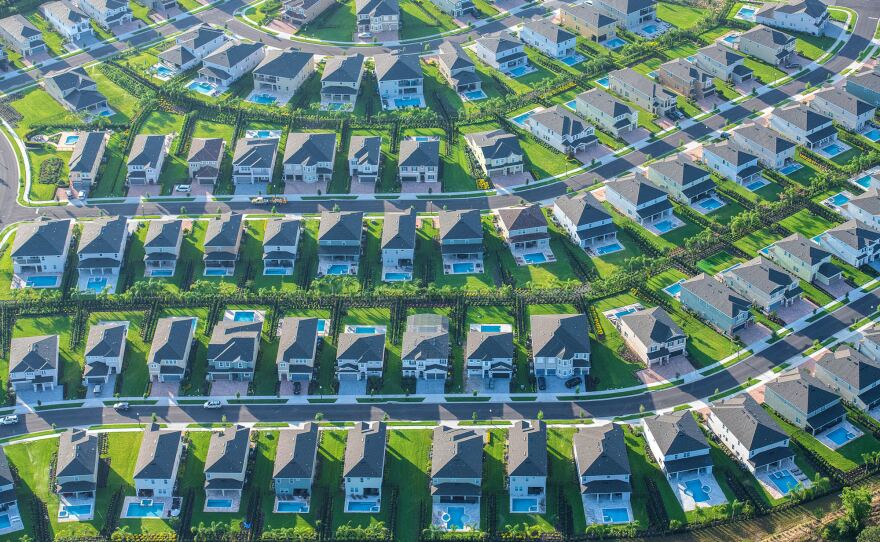
Responsible Development can be applied to alter the macro systems of society through advocacy and the adoption of policy. This is an exciting part of Community Rewilding that will create large scale change with preservation and conservation- decreasing the need for restoration. We can have our cake and eat it too. We can have economic growth, progress, and change without sacrificing the conservation of nature and all of its benefits.

Kaddu Sebunya, CEO of African Wildlife Foundation states “We have seen normalization of the supposedly inherent tension between conservation practices and economic growth. But growth and development are not the same things. When something grows it gets bigger, when something develops it becomes different. Not all growth is development. Not all growth leads to development.”
In the United States, Responsible Development is being applied in the South and West where modern corporatization, development, and land use change is on the rise due to economic development.
This is the future for our communities. It is certainly needed here in New Jersey.
Join me to bring rewilding to New Jersey!
To learn more about Fran, visit About the Founder & The Origin Story.
Check out this story & more on the Founder’s Blog! Get notified for every new post. Subscribe Today!
We are Bringing Rewilding to New Jersey. Get notified of every new post. Subscribe Today!
Help to Rewild NJ. Join the Rewild NJ Movement today.
Learn More & Connect
Email: rewildnjcc@gmail.com
Follow us on social media @rewildnjcc.
Donate
Rewild New Jersey Community Cooperative (RNJCC) is completely volunteer based and self-funded. Please contribute funds to support our launch, development, and overhead costs!
 Rewild New Jersey Community Cooperative (RNJCC)