By: Alex Mackay, Social Media Intern
There are so many benefits that can come from owning and raising livestock, specifically chickens. As I have talked about in my previous blog, I have owned
chickens for years and even moved homes with our chickens. From taking care of them and even hatching chicks, they have taught me a lot about responsibility.
However, there are many things most people don’t enjoy talking about when it comes to livestock.
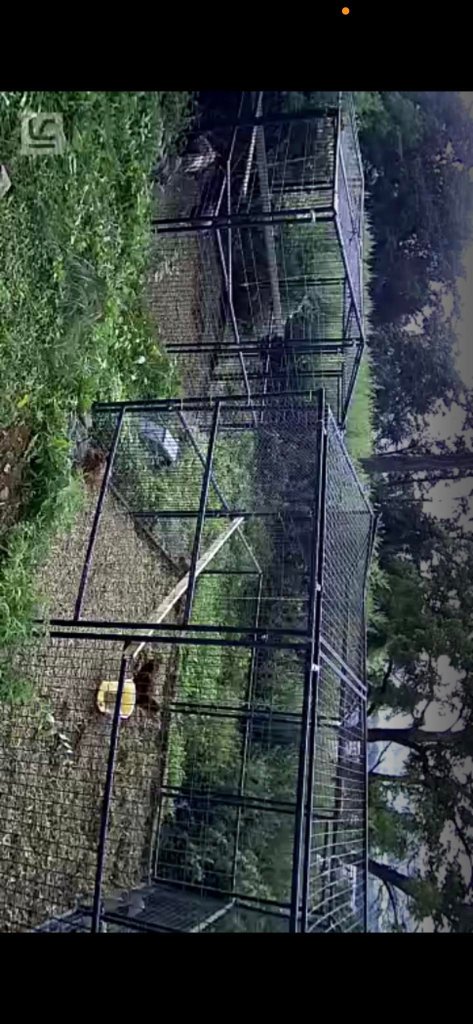
In my case, my family lost all the chickens we owned in a couple of weeks due to one animal in particular. We had around 20 chickens, and it was not abnormal to lose a chicken here or there due to other animals, like foxes or coyotes. In each of those cases, my family would add new ways to protect them from wild animals. We stopped free-ranging and made an enclosed outdoor area instead, and added more chicken wire to every open area/ into the ground. We even had a camera out there to watch them, and more than enough perches for them to get up high with. For years, this was enough, and we had no issues until this past year.
An animal we never knew was in New Jersey or even knew could do what it did to our chickens, took out the entire flock. Weasels, yes, you read right, weasels are in New Jersey. New Jersey has two kinds of weasels: a Short-Tailed Weasel (Mustela erminea) and a Long-Tailed Weasel (Mustela frenata). We had never heard about weasels being in New Jersey, let alone thinking they would go after chickens, given their size. Turns out my family actually lives in the perfect habitat for them, wooded and rocky environments, but we never saw them before. It wasn’t until the first few attacks that caused us to dig into what was killing off our chickens, only to discover the not-so-cute nature of weasels.
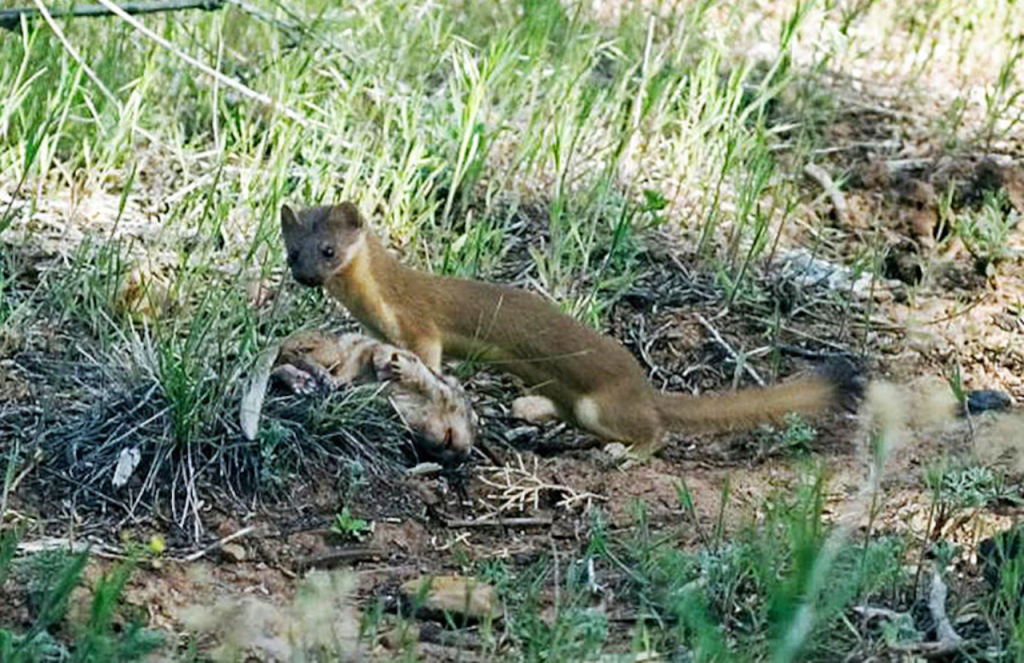
Weasels are known to see chickens as something to play with and treat killing them as a game. After finding this out, we tried to add more chicken wire anywhere we could around our chicken coop, even boarded up the tunnels to the outside part of the coop to keep them from getting in, but nothing worked. Weasels would just dig under, climb, and literally weasel their way in. Then we tried capturing it just to try and relocate it to get it to stop. Nothing worked, however, leading to a massacre of our entire flock of
chickens and our neighbor’s chickens. After all this happened, we decided to take a break from owning chickens, especially since we were heartbroken to lose every chicken we had.
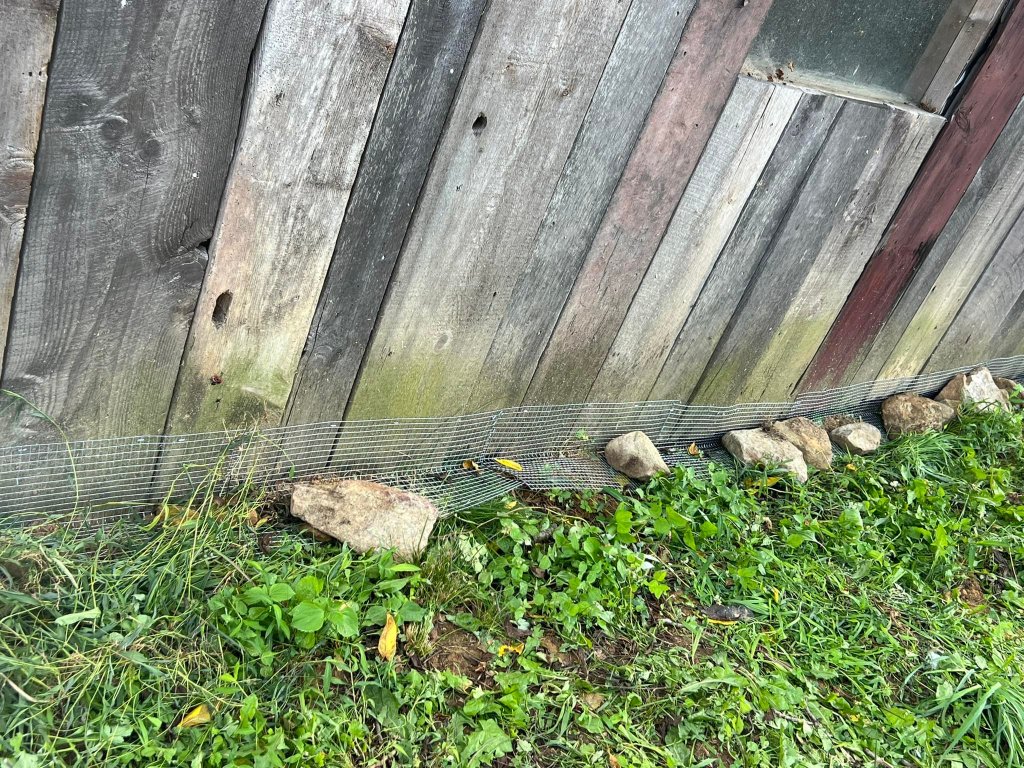
From it, though, we were able to learn what we were going to have to do differently if we wanted to ever get chickens again. The wildlife isn’t the thing we have to attack or kill in order to better protect livestock. Even though my family wished they could capture the weasel, it wouldn’t have helped protect our chickens from another attack in the future. It would have actually caused more harm to go after it. That is why, after everything, we decided the best course of action was to do better the next time we decided to get chickens again. For instance, we would put a layer of concrete under dirt in order to stop animals from being able to dig under the coops. Then block off the gaps with more than just chicken wire, and maybe even add ways to block off the outdoor entrances at night. These are all ways we have thought of in order to better protect our chickens in the future, without the need to hunt down and capture what is attacking them.
Human-wildlife conflicts are a cornerstone of modern conservation- especially conflicts around farming and livestock. Wildlife are an important part of our success as farmers and homesteaders, while wildlife cause us stress and financial burden, the ecological services we receive from biodiverse local environments are invaluable. Removing “nuance” wildlife disrupts the order and function of our ecosystems. Rewilding is significant because it helps us understand that our greatest power is nature- we need to work with it not against.
Owning livestock of any kind does has many challenges and it isn’t always to happiest of times. It takes a lot of work to change how we view wildlife, as it is hurting something that we love and utilize for food resources. We don’t need to fight wildlife; we just have to do better to prevent them from getting to our livestock. Understanding the ecology and nonlethal options, such as organic deterrents, is the first step to preventative actions.
Check out this story & more on the Community Blog! Get notified for every new post. Subscribe Today!
We are Bringing Rewilding to New Jersey. Get notified of every new post. Subscribe Today!
Help to Rewild NJ. Join the Rewild NJ Movement today.
Learn More & Connect
Email: rewildnjcc@gmail.com
Follow us on social media @rewildnjcc.
Donate
Rewild New Jersey Community Cooperative (RNJCC) is completely volunteer based and self-funded. Please contribute funds to support our launch, development, and overhead costs!
 Rewild New Jersey Community Cooperative (RNJCC)