By: Francesca Mundrick, Founder & Executive Director
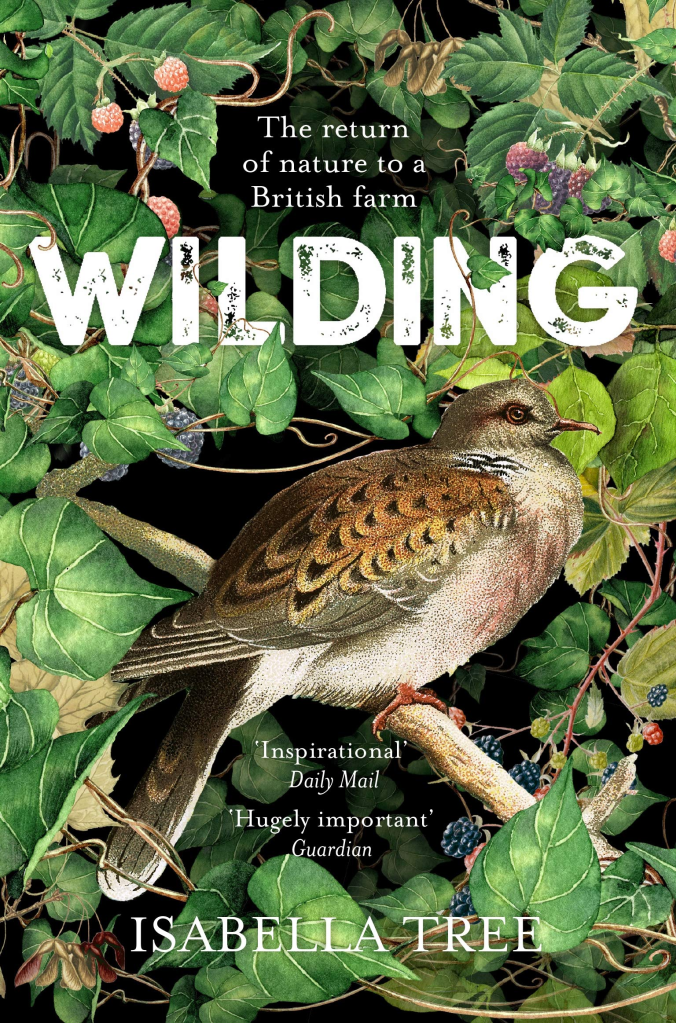
In my early search for rewilding knowledge and community, I found a book called Wilding by Isabella Tree. Wilding tells the story of the Knepp Estate, a famed, internationally recognized rewilding project.
The Knepp Estate sits on a 3,500-acre area near Horsham in West Sussex, England. After inheriting the estate from his grandparents in 1983, Charles Burrell and his wife Isabella Tree began running the estate in a traditional fashion- attempting to make an income through farming.
The couple soon realized that the traditional large-scale intensive farming practices were a failure. In 2002, the pair embarked on what has become a pioneering rewilding project, converting the estate into patchwork of habitats including grasslands, groves, scrub, and forested areas. The Knepp rewilding process included the reintroduction of large herbivores, wildlife and domesticated livestock, that support the overall functionality of the ecological community.
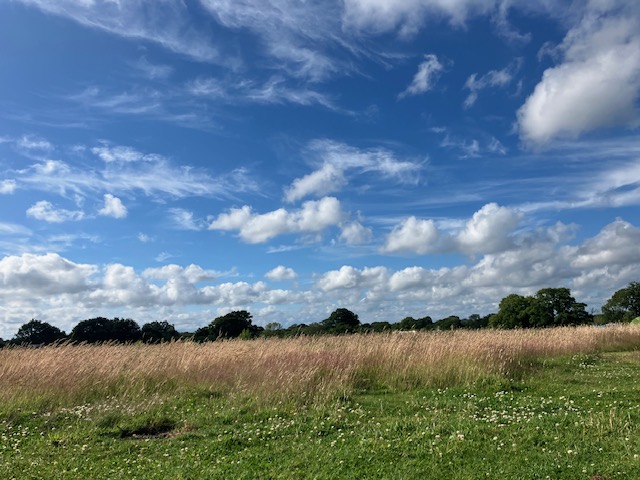
Over the last twenty years of wilding, from the soil to the tallest tree, the Knepp Estate has become a beacon of life within the English landscape- reestablishing habitat diversity and overall biodiversity. The site features a plethora of native wildlife including nightingales, turtle doves, purple emperor butterflies, white storks, and beavers.
The Knepp Estate is now a successful business, where balanced biodiversity supports a thriving sustainable development model.
Before diving into my adventures at Knepp, we must first take a moment to understand the basics of rewilding history and the context behind what makes rewilding projects like Knepp so significant.
The discipline of rewilding was first developed in the early 1990s as a conservation model focused on the large scale restoration of wilderness and ecological processes. Rewilding became popularized by American environmental advocate and conservationist, Dave Foreman, who established early ideas regarding the importance of megafaunas in ecosystems, habitat connectivity, and ecological balance. By the late 1990s, conservation biologists Michael Soulé and Reed Noss authored the first scientific framework for rewilding called the Three C’s of rewilding- Carnivores, Cores, & Corridors.
Rewilding in practice, defined and growing in North America, was taken up in Europe as a leading conservation strategy.
While the goals are the same, the practice of rewilding varies based on the location in which it is being applied. This is key when we look to assess and compare the results of rewilding in different parts of the world. The way that rewilding is applied in North America, for instance, may be different from European countries. Needs are diverse due to a difference in history, culture, and societal norms around human-environmental relationships.
For a location like the UK, rewilding is so impactful because the ecological restoration is starting from a much lower level of environmental stability and biodiversity.
In the UK, biodiversity is at devastating lows. One might believe that there is much nature in England because it is generally associated with rural countryside and open space. Unfortunately, this is far, far from reality.
England has seen a massive decline in ecology over many decades. A decline in species has affected migratory birds, insects, mammals, trees, flowering plants and more. These trends are due to a long history of human influences including land use change, intensification of agriculture, and habitat loss and fragmentation. Specifically, societal changes after the Industrial Revolution and WWII, have drastically altered local environments.
The common English citizen has little to no relationship with local nature. Most English people do not see a diversity of wildlife in daily life- in urban or rural communities. There are protected areas, nature parks, conservation areas, and available green space throughout the UK, however, outdoor recreation culture, access to natural areas, interactions with wildlife, and wilderness is nowhere near what an American would encounter. Seeing a Raccoon, Coyote, Fox, White Tailed Deer or Black Bear on a daily basis is very far from the English experience.

Comparatively to North America, or even New Jersey, the historical influences on our environment are similar, however, our overall relationship with wilderness is not. North America, due to a more recent history of indigenous culture and transition into Western society, still has much wilderness and biodiversity to offer- even in a place like New Jersey. To an English person, New Jersey is a wild place.

This is why rewilding in the UK, throughout Europe, and around the world is so important. This is why the Knepp Estate holds such significance. The Knepp Estate is not just a conservation site, it is an epicenter for life in a landscape where there is none. Called the “Safari of England”, it is a place where people can witness the natural world in a place where they usually do not.
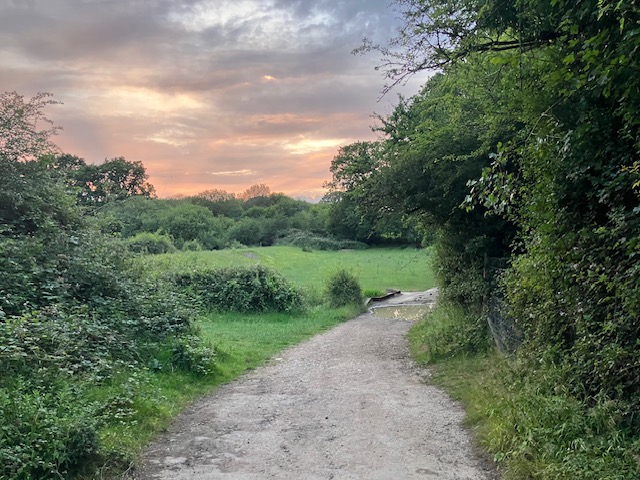
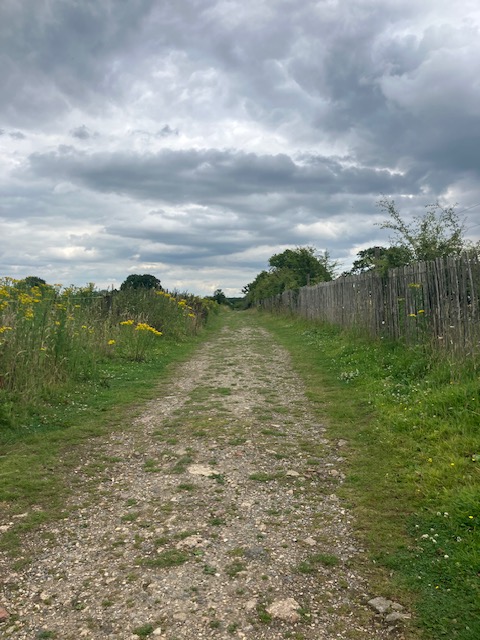
I am lucky enough to have personally visited Knepp. I planned my trip to England, packed some light gear in my backpack, and set out to experience the site for myself. I camped, I walked, attended educational workshops, went swimming, went to the pub, and connected with other visitors to understand the English experience.
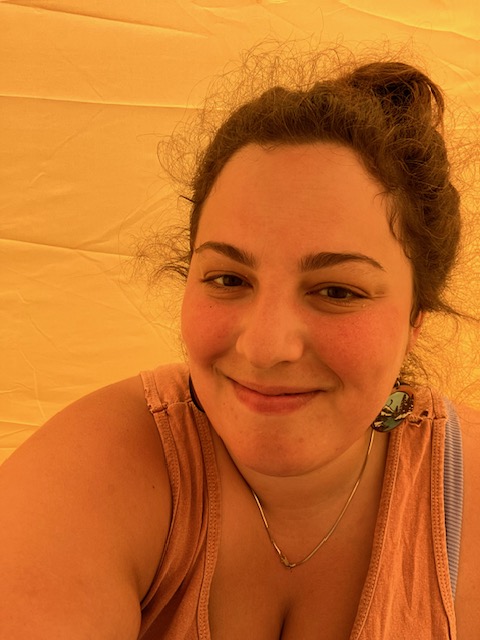
When I visited Knepp, I was the only American in sight. Many people asked me, why did you come here? There are so many places in the US and in the world that have exciting natural wonders and ecology. Why did I go to Knepp? I went to Knepp to explore the dynamics of how society shapes rewilding. To understand how poor environmental decision making has plagued our closest national cousin, England, and how those influences have historically transferred to America and to our State- New Jersey. I went there to learn what not to do and what to do. I went there to learn that there is always hope in rewilding- even when things are at the bleakest.
I have much more to share about my experiences at the Knepp Estate! Stay tuned for Part II and III!
For more on the Knepp Estate and rewilding, please visit their website at https://knepp.co.uk/.
Join me to bring rewilding to New Jersey!
To learn more about Fran, visit About the Founder & The Origin Story.
Check out this story & more on the Founder’s Blog! Get notified for every new post. Subscribe Today!
We are Bringing Rewilding to New Jersey. Get notified of every new post. Subscribe Today!
Help to Rewild NJ. Join the Rewild NJ Movement today.
Learn More & Connect
Email: rewildnjcc@gmail.com
Follow us on social media @rewildnjcc.
Donate
Rewild New Jersey Community Cooperative (RNJCC) is completely volunteer based and self-funded. Please contribute funds to support our launch, development, and overhead costs!
 Rewild New Jersey Community Cooperative (RNJCC)