By: Anna Bergen, Outreach & Engagement Intern
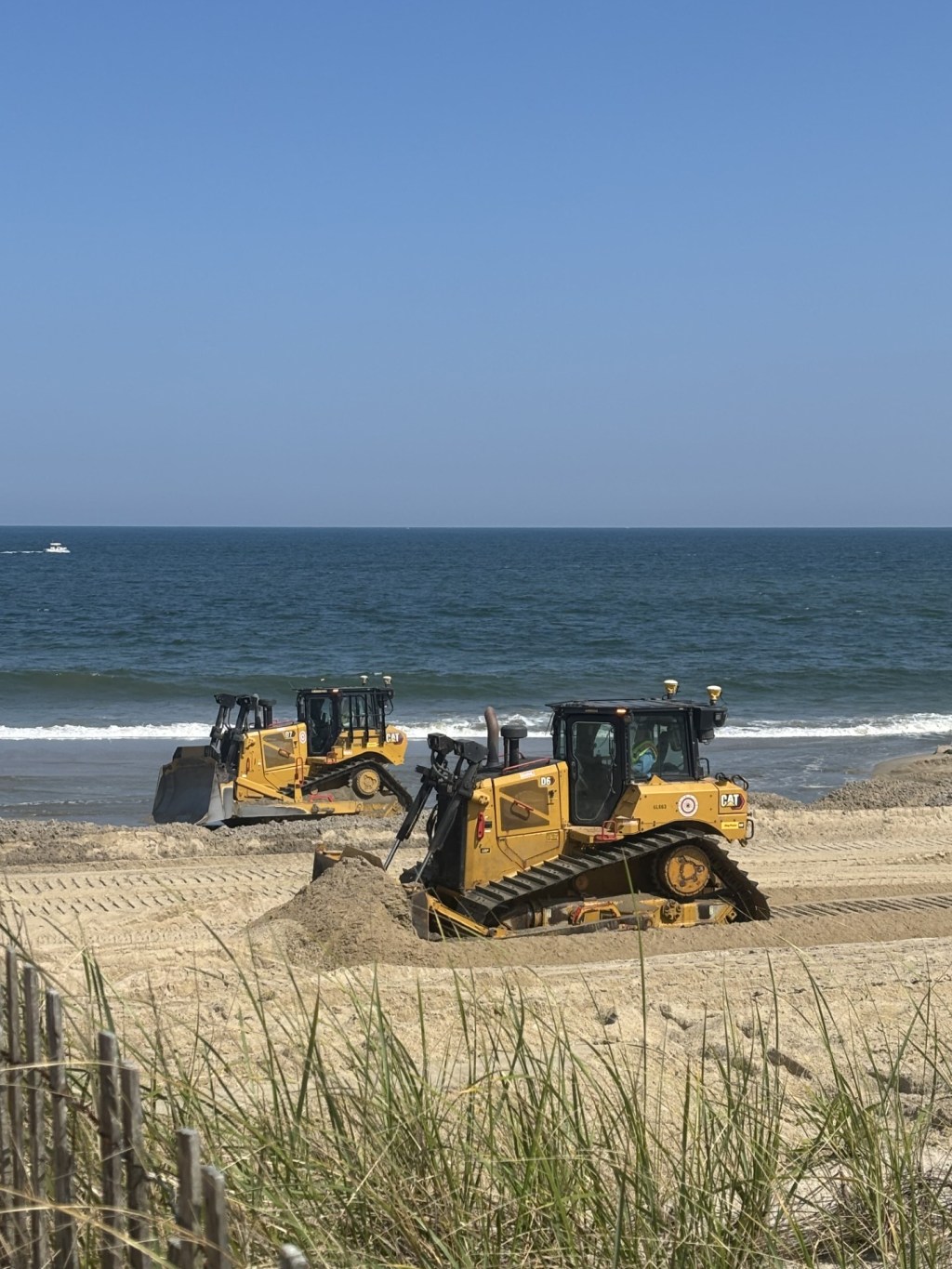
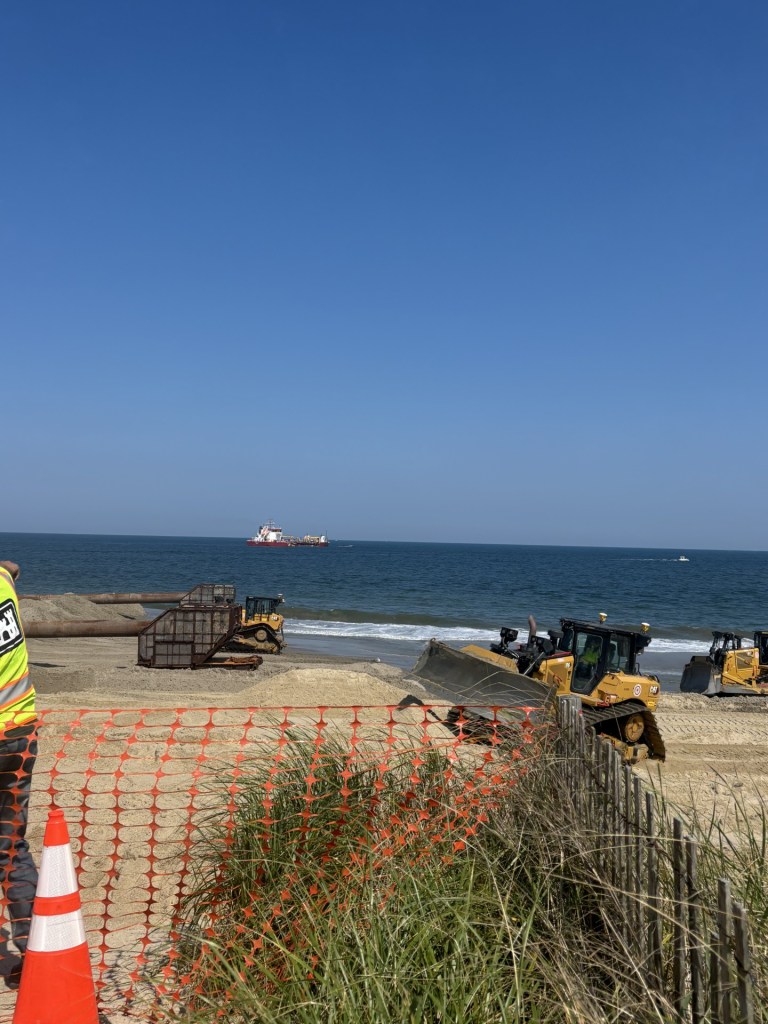
It was a bright and sunny day down the shore when I decided to go to my favorite place, Bayhead Beach. While walking up to the beach, I was stopped by construction tape and a crowd of people, along with a United States Army Corps engineer who was answering questions about why we could not access our precious beach. Behind him was massive equipment, including a cutter suction dredger farther out in the ocean. A cutter suction dredger works through two basic methods: excavation and suction. A rotating cutting tool breaks up the sand, which then gets suctioned into pipes running from the dredge to the beach (where the sand needs to be replenished) using carefully placed pipelines.
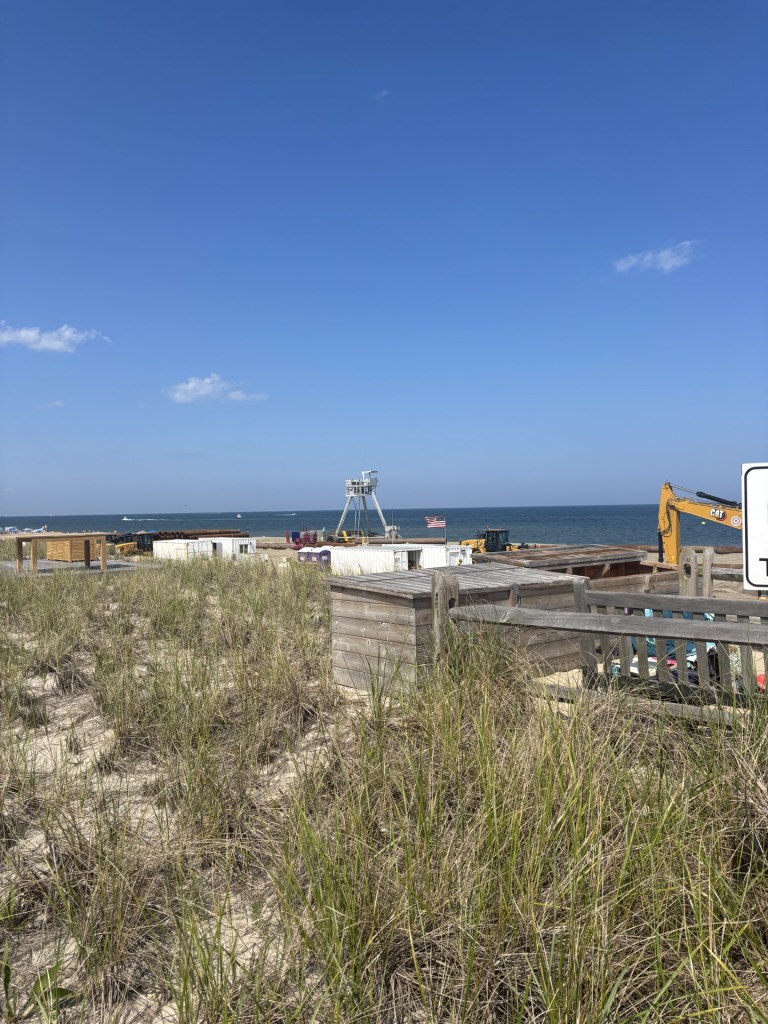
Once the sand reaches the beaches, bulldozers shape and level out the beaches, building sand dunes and slopes. In some areas, dunes are being rebuilt with sand fencing, beach grass planting, and access paths to preserve the formation and prevent erosion. To ensure the beaches are leveled and built to particular specifications, the engineers use GPS and laser-guided systems. Hearing this information firsthand, while the process was unfolding right in front of me, was fascinating.
One may ask, “Why is all of this information important?” Well, it is simple, the restoration of the beaches is contributing to the ecological reciprocity between humans and wildlife. Rebuilding the dunes and planting native species such as beach grasses creates vital habitats for coastal birds, insects, and other shoreline species. Secured dunes help prevent sand erosion and offer critical protection for breeding areas of coastal fauna. These landforms used to be developed through winds and the tides; however, the dunes were destroyed by coastal development and extreme weather. Reconstructing the dunes imitates nature-based shoreline defenses. The dunes are also crucial in protecting the residences of Bayhead due to sea-level rise and severe storms.
Projects such as the beach restoration in Bayhead, NJ, serve as a reminder of our place within ecological systems, encouraging respect for our shared environment. While there are positives to beach restoration, it is also important to be aware of some negative impacts if the project is not conducted properly. Dredging, when poorly managed, can disturb nesting grounds and/or marine ecosystems. One has to ask- is it better for nature to lead the way? Are we “restoring” coastal areas for nature or for ourselves?
Bay Head Beach is not just one of my favorite places during the summer months – it is now a symbol of our connection to the land and sea and the importance of the ecosystem services in coastal environments that provide so much for us.
Check out this story & more on the Community Blog! Get notified for every new post. Subscribe Today!
We are Bringing Rewilding to New Jersey. Get notified of every new post. Subscribe Today!
Help to Rewild NJ. Join the Rewild NJ Movement today.
Learn More & Connect
Email: rewildnjcc@gmail.com
Follow us on social media @rewildnjcc.
Donate
Rewild New Jersey Community Cooperative (RNJCC) is completely volunteer based and self-funded. Please contribute funds to support our launch, development, and overhead costs!
 Rewild New Jersey Community Cooperative (RNJCC)